One pair of gloves does not work for every job. The wrong gloves can be dangerous — too bulky and you lose the dexterity to work safely around moving parts or fasteners; too thin and you have no protection when something goes wrong.
Here's what different trades actually need, and how to tell a genuinely protective glove from one that's just marketed that way.
Understanding cut-resistance ratings
Before picking gloves for any trade that involves sharp edges — sheet metal, glass, blades, or fresh-cut lumber — it helps to understand the ANSI/ISEA cut-resistance scale, which runs from A1 (lowest) to A9 (highest). Most general work gloves fall in the A1–A4 range; electricians and metal fabricators often want A4 or higher. The number on the tag isn't marketing fluff — it comes from a standardized test, so it's one of the few glove specs you can actually compare across brands.
For general construction
You want impact protection and a good grip, since a huge share of jobsite hand injuries come from pinch points and blunt impact, not just cuts.
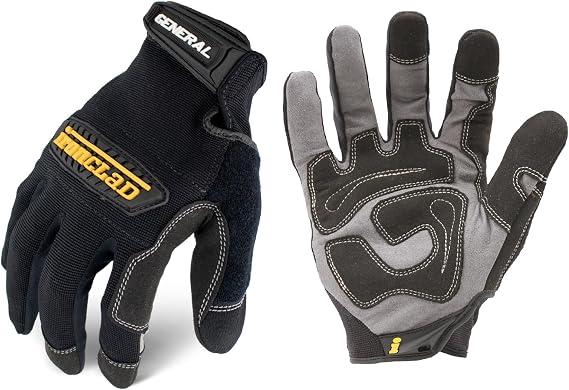
Ironclad General Utility Work Gloves (GUG)
TPR impact guards and reinforced palms, with 25,000+ ratings backing up the durability claim. Touch screen compatible fingertips and machine washable.
Around $21
View on AmazonThese take a beating and last. The touchscreen fingertips are clutch when you need to check a plan on your phone without stripping off a glove every time — small thing, but it adds up over a ten-hour day.
For mechanics and fabrication
Oil and grease destroy regular gloves fast — the material breaks down, loses grip, and starts sliding on tool handles right when you need control most.
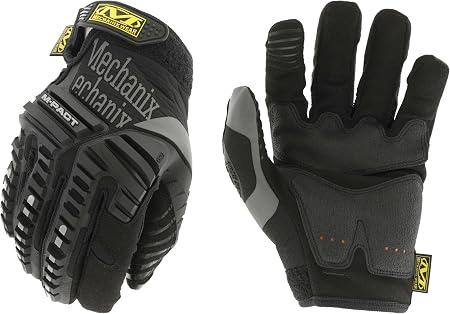
Mechanix Wear M-Pact Touchscreen Work Gloves
Oil and water resistant with knuckle protection and an anti-slip grip. Over 5,000 ratings at 4.6 stars.
Around $30
View on AmazonThe standard in auto shops for a reason. Good feel and they hold up to fluids that would soak through and ruin a cheaper leather or cotton glove within a week.
For electrical work
Electricians need cut resistance and dexterity in the same glove, which is a harder balance to strike than it sounds — most gloves that are cut-resistant enough sacrifice the feel needed to strip wire or seat a small terminal.
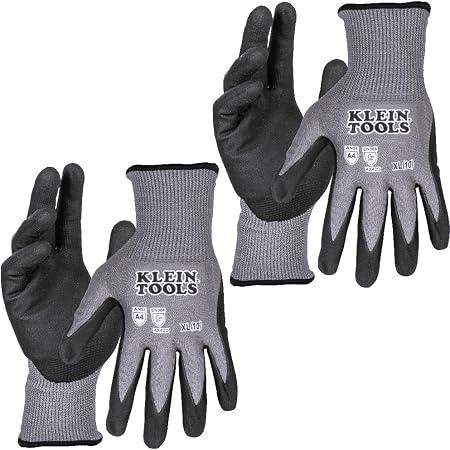
Klein Tools 60590 Knit Dipped Cut Resistant Gloves
ANSI A4 cut resistance — a real, tested rating, not a marketing claim — in an HPPE knit glove that's touchscreen capable and thin enough to still handle wire and small terminals.
Around $16
View on AmazonYou can strip wire and still protect your hands. That balance is hard to find, and it's the main reason this style of glove commands a premium over a generic leather work glove.
Important note: leather work gloves are not rated for electrical shock protection. If you're working near live circuits, you need dedicated rubber insulating gloves rated for the voltage involved, with a leather protector glove worn over them — not a substitute for them.
Sizing and fit
A glove that's too loose will bunch up inside your palm exactly when you need a firm grip, and one that's too tight will fatigue your hand faster and reduce dexterity. Measure around your dominant hand's palm (excluding the thumb) at its widest point to get an accurate size rather than guessing off shoe-size-style charts, which vary a lot between brands.
Quick tip
Buy two pairs. One for heavy work, one for precision. Trying to use the same gloves for everything just means both jobs suffer — you'll either be too clumsy for fine work or under-protected for rough work. Keep the heavy pair in your bag and the precision pair in a pocket so you're never digging through a bag mid-task.