Lincoln Viking 3350 Review (2026): Specs, ADV Updates, and Best Alternatives
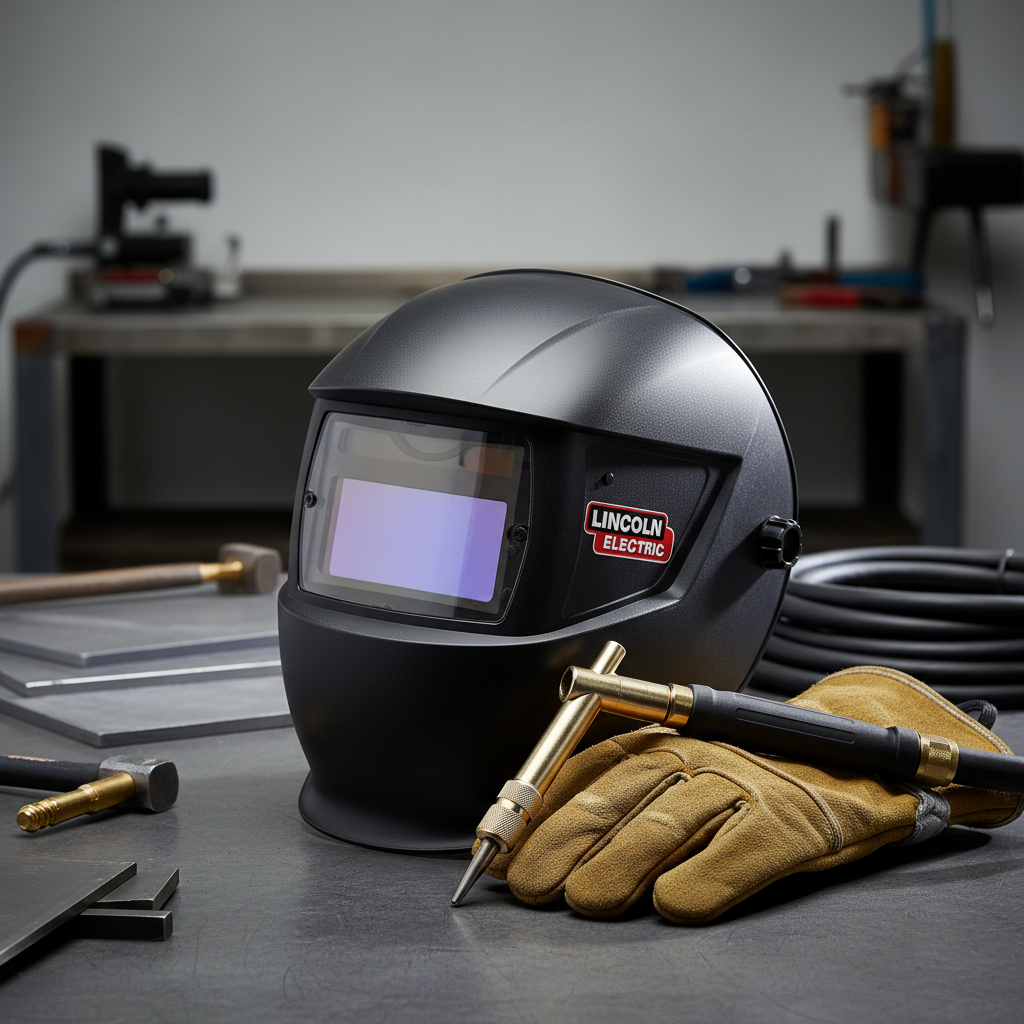
The Lincoln Electric Viking 3350 has been one of the most popular professional auto-darkening welding helmets for years, and it's still the helmet a lot of welders upgrade to once they're done squinting through a cheap hood. It's also expensive — usually $500 or more — so it's worth knowing exactly what you're paying for, what's changed with the newer ADV version, and when a cheaper helmet makes more sense.
This review is based on Lincoln's published specs, the ANSI and optical ratings, and long-term feedback from welders who use the 3350 every day. We also compare it to the helmets most people cross-shop against it: Lincoln's own Viking 2450, the Miller Digital Infinity, and the ESAB Sentinel A60.
Lincoln Viking 3350 at a glance
- Lens: Lincoln 4C lens technology, optical clarity rating 1/1/1/1
- Viewing area: 3.74 x 3.34 in. (about 12.5 square inches)
- Shade range: variable shade 5–13, with a light state for setup and inspection
- Arc sensors: 4
- Modes: weld, cut, and grind
- Headgear: Lincoln X6 headgear on current models
- Standards: ANSI Z87.1+
- Price: roughly $535–$575 on Amazon, depending on version and graphic
What the Viking 3350 does well
Optical clarity and true color
The 3350's biggest selling point is the 4C lens. Older and cheaper auto-darkening helmets give everything a heavy green tint, which makes it harder to read the puddle, see the edges of your joint, and tell where you are on the work in the light state. Lincoln's 4C lens is designed to show more natural color, and the 1/1/1/1 optical clarity rating is the highest score in the EN379 rating system — it covers optical quality, light diffusion, shade consistency across the lens, and how much the shade changes when you look through the lens at an angle.
In practice, welders who move up to a 1/1/1/1 lens consistently say the biggest difference is reduced eye fatigue over a long day, because they're not straining to see through distortion or uneven shading.
A big viewing area
At about 12.5 square inches, the 3350's viewing area is much larger than most budget helmets and larger than Lincoln's own Viking 2450. A bigger window makes it easier to see the whole joint and your surroundings, which matters for out-of-position work, fit-up, and working around other trades.
Reliable arc detection
Four arc sensors give the 3350 good coverage when part of the lens is blocked — reaching around a pipe, working in a corner, or welding overhead. It handles stick, MIG, flux-core, and TIG, though, like most auto-darkening helmets, very low-amperage TIG work may need the sensitivity turned up.
Comfortable for long days
The X6 headgear spreads the helmet's weight across more contact points than older suspension designs, and it's one of the reasons the 3350 is popular with welders who wear a hood for most of a shift. Comfort is personal, but headgear complaints are much less common for the 3350 than for budget helmets.
What's different about the Viking 3350 ADV
Lincoln's newer ADV versions of the Viking 3350 keep the same core lens and viewing area but add an integrated external grind button. On older helmets, switching to grind mode meant reaching inside the hood to change settings, which usually meant taking off a glove. With the ADV's external button, you can switch between weld and grind without taking the helmet off.
If you're buying new, the ADV is the version to look for. If you find an older non-ADV 3350 at a real discount, it's still an excellent helmet — just know that grind mode is less convenient.
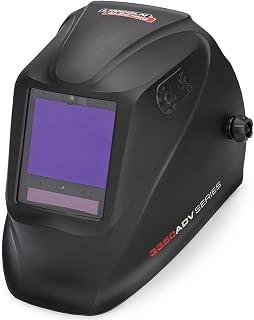
Lincoln Electric Viking 3350 ADV Auto Darkening Welding Helmet (K3034-5, Black)
The current version of the Viking 3350 — 4C lens, 1/1/1/1 clarity, 12.5 sq. in. view, and an external grind button. The best pick for most buyers.
$535.00
View on AmazonBlack vs. Code Red and the graphic versions
The Viking 3350 comes in plain black and several graphic designs, including the popular Code Red. The graphics are cosmetic — the lens, viewing area, and headgear are the same. Graphic versions usually cost more, and the black version is usually the best value.
One practical note: owners report that matte black shells hide scratches and spatter marks better than glossy graphic shells over time.
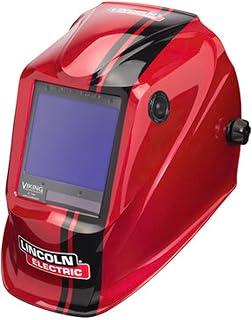
Lincoln Electric Viking 3350 Code Red Welding Helmet
The same Viking 3350 lens and viewing area in Lincoln's popular Code Red graphic. You're paying extra for the look.
$575.00
View on AmazonWhere the Viking 3350 falls short
No helmet is perfect, and the 3350 has a few real drawbacks:
- Price. At $500+, it's a serious investment. For occasional welding, it's hard to justify.
- Weight and size. The big lens makes the hood larger than low-profile helmets, which can be awkward in very tight spaces.
- Sensitivity setup. Owners say it takes some adjustment to dial in sensitivity and delay, especially for low-amp TIG or when other welders are working nearby.
- Batteries and consumables. Like most auto-darkening helmets, it needs occasional battery changes, and you'll go through outside and inside cover lenses. Budget for those.
- Older versions lack the external grind button. If you're buying used or on clearance, check whether it's the ADV model.
Viking 3350 vs. the alternatives
Lincoln Viking 2450 ADV
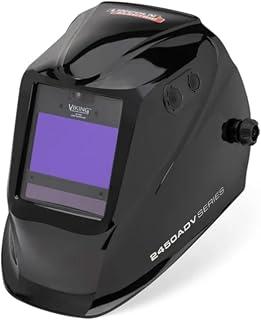
Lincoln Electric Viking 2450 ADV Series Black Welding Helmet
The same 4C lens technology and ADV grind button as the 3350, with a smaller viewing area for about $100 less.
$429.00
View on AmazonThe 2450 is the 3350's little brother. It uses Lincoln's 4C lens technology and comes in an ADV version with the external grind button, but the viewing area is smaller. If you mostly weld in a fixed position at a bench and don't need the bigger window, the 2450 saves about $100 without giving up lens quality.
Choose the 2450 if budget matters and you don't need the largest viewing area. Choose the 3350 if you do a lot of out-of-position work or want the most visibility.
Miller Digital Infinity
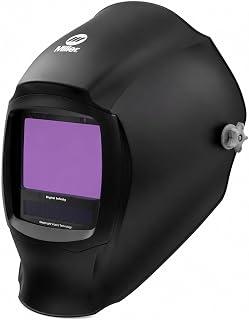
Miller Digital Infinity Welding Helmet with ClearLight Lens
Miller's flagship helmet, with an even bigger viewing area than the 3350 and Miller's ClearLight lens. The 3350's closest competitor.
$435.99
View on AmazonThe Digital Infinity is the helmet most often compared to the Viking 3350. It has a slightly larger viewing area than the 3350, Miller's ClearLight lens for better color and light-state visibility, and an X-Mode setting designed to help detect the arc when sensors are blocked. When we checked, it was also listed for about $100 less than the 3350.
Welders are split between the two, and much of it comes down to brand preference and headgear fit. Owners tend to praise the 3350's clarity and the Digital Infinity's viewing area.
Choose the Miller if maximum viewing area and price matter most. Choose the Lincoln if you prefer the 4C lens and X6 headgear.
ESAB Sentinel A60
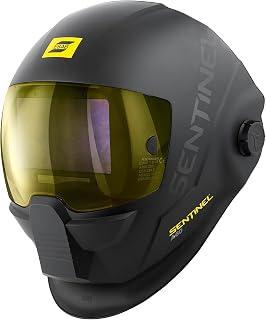
ESAB Sentinel A60 Welding Helmet, Black
A low-profile premium helmet with touchscreen controls and memory settings — the best pick for tight spaces.
$359.00
View on AmazonThe Sentinel A60 takes a different approach: a low-profile shell that's easier to fit into tight spaces, a 1/1/1/1 lens, and a touchscreen control panel with memory settings for switching between processes. It's also the least expensive helmet in this comparison and carries a 4.7-star rating.
The trade-off is a smaller viewing area than the Viking 3350 or Digital Infinity.
Choose the ESAB if you work in tight spaces, switch between processes often, or want premium clarity for less money.
Who should buy the Viking 3350?
The Viking 3350 makes the most sense if you:
- Weld professionally, most of the day, most days of the week
- Do a lot of out-of-position or structural work where a big viewing window helps
- Want a top-tier lens to reduce eye fatigue over long shifts
- Need a helmet that meets ANSI Z87.1+ for jobsite use
You can probably skip it if you:
- Weld occasionally or as a hobby
- Mostly work at a bench in a fixed position (the Viking 2450 is a better value)
- Work in very tight spaces (consider the ESAB Sentinel A60)
Is the Viking 3350 worth the money?
For full-time welders, the math usually works out. A helmet you wear eight hours a day for several years costs well under a dollar per workday, and a better lens and better headgear make every one of those days easier on your eyes and neck. Compared to replacing a cheap helmet every year or two, the 3350 is a reasonable investment.
For occasional welders, it's harder to justify. A mid-range helmet will protect you just as well — what you're paying for with the 3350 is clarity, viewing area, and comfort over long days.
Bottom Line
The Lincoln Viking 3350 ADV is still one of the best professional welding helmets you can buy, with a top-rated 4C lens, a large viewing area, comfortable X6 headgear, and an external grind button on the current ADV models. For most buyers, the plain black ADV version is the best value — the graphic versions cost more for the same helmet.
If you want to save money, the Viking 2450 ADV offers the same lens technology with a smaller window, and the Miller Digital Infinity gives you a bigger viewing area for less. If you work in tight spaces, the ESAB Sentinel A60 is the best low-profile alternative. Whichever you choose, keep spare cover lenses on hand and replace them often — a scratched cover lens wastes the clarity you paid for.
Looking for more welding gear? See our guides to welding jackets for heavy fabrication and welding tool bags.