Which Kreg Pocket Hole Jig Should You Buy? 320 vs 520PRO vs 720PRO (2026)
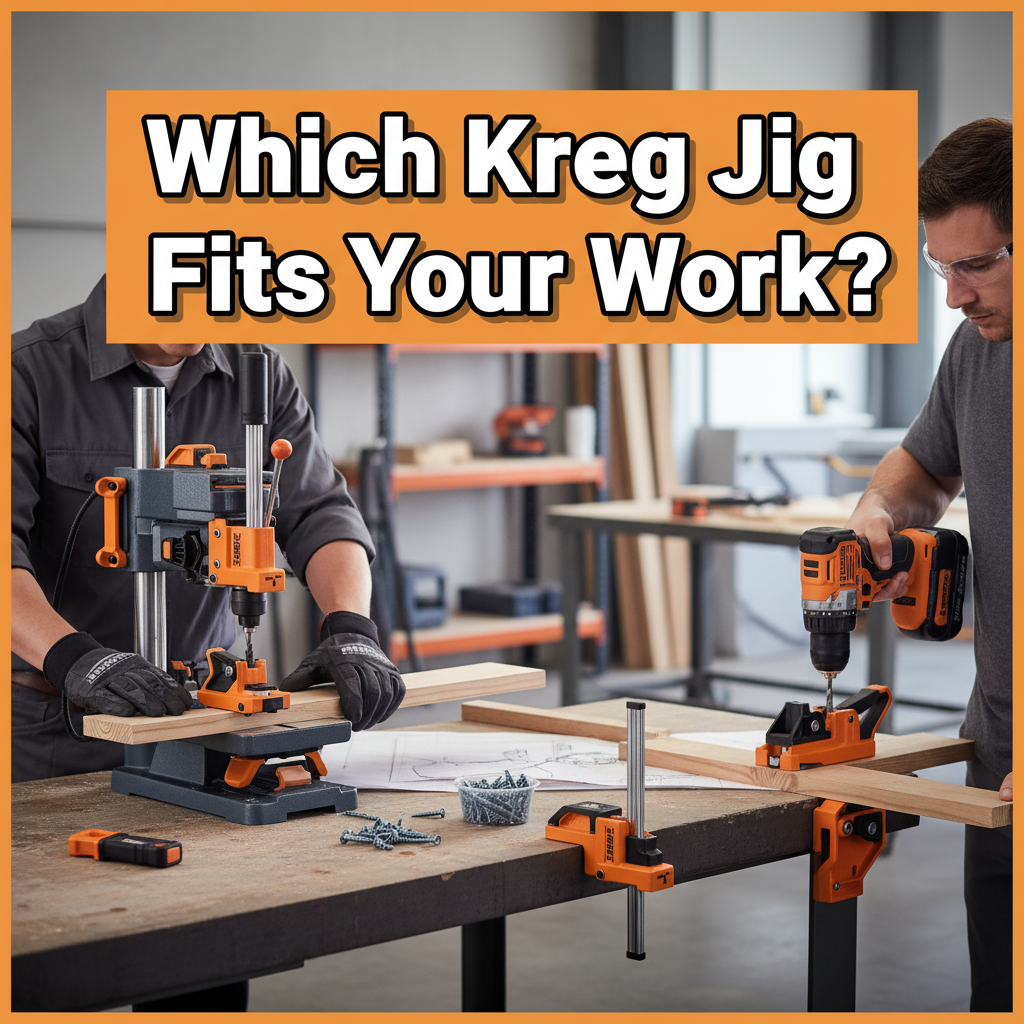
Kreg makes more pocket hole jigs than most people realize, and the names don't help — the 320, 520PRO, and 720PRO sound like a progression, but they're really three different tools built for three different ways of working. Buy the wrong one and you'll either be fighting a benchtop jig on a jobsite or trying to build a run of cabinets one hole at a time with a handheld guide.
If you're deciding between Kreg and a cheaper alternative, we covered that in our Kreg vs VEVOR pocket hole jig comparison. This post assumes you've settled on Kreg and want to know which model to buy.
Here's the short version before we get into each one:
- Kreg 320 (~$39): two portable drill guides. Best for repairs, tight spaces, and occasional use.
- Kreg 520PRO (~$99): handheld with a built-in clamp. Best for jobsite carpentry, installs, and big panels.
- Kreg 720PRO (~$149): benchtop with an auto-adjusting clamp. Best for cabinets, furniture, and regular shop work.
- Kreg K4 (~$99): the older benchtop model. Only worth it if you find it discounted.
- Kreg Foreman DB210 (~$449): an electric pocket hole machine. Best for production shops and high volume.
Kreg Pocket-Hole Jig 320
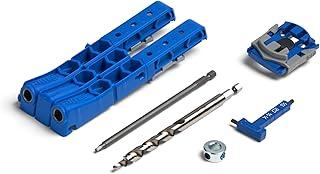
Kreg Pocket-Hole Jig 320 (KPHJ320)
Kreg's most affordable jig — two portable drill guides that go anywhere. Great for repairs and occasional use, slow for production work.
$39.00
View on AmazonThe 320 is two small drill guides that you clamp to your workpiece, either together or separately. That's its biggest strength: there's no base, so you can clamp it onto an installed face frame, a deck rail, or the inside of a cabinet that's already on the wall — places a benchtop jig can't reach. For repair work and punch-list fixes, that's genuinely useful.
It also comes with the stepped drill bit, depth collar, and a hex wrench, so you can start drilling right away. With thousands of ratings and a 4.8-star average, owners generally agree it does exactly what it promises.
The drawbacks are all about speed. You'll be setting and clamping it for every pair of holes, and you need a separate face clamp (sold separately unless you buy the bundle) to hold it securely. Setting it for material thickness is manual. If you're drilling more than a few dozen holes on a project, you'll get tired of it quickly.
Best for: carpenters who need pocket holes occasionally — repairs, installs, and tight spots — and anyone who wants a backup jig for the truck.
Kreg Pocket-Hole Jig 520PRO
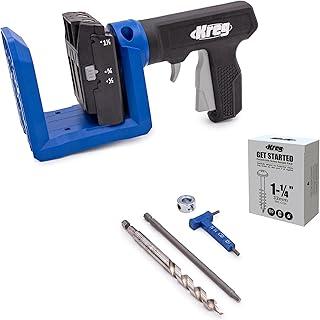
Kreg Pocket-Hole Jig 520PRO (KPHJ520PRO2)
A handheld jig with a built-in clamp and rotating handle — the best Kreg for jobsite work and big panels you can't bring to a bench.
$99.00
View on AmazonThe 520PRO solves the 320's biggest problem: you don't need a separate clamp. It has a built-in clamping mechanism and a handle you hold while drilling, so you can take it to the work instead of bringing the work to a bench. On a jobsite, that means drilling pocket holes in a full sheet of plywood, a built-in, or a long shelf without moving it.
The handle rotates so you can hold it comfortably at any angle, and the jig sets up for material thickness quickly. The current version (KPHJ520PRO2) comes with a starter supply of screws. It's one of the highest-rated jigs in Kreg's lineup on Amazon, at 4.9 stars.
The drawbacks: it's still drilling one pocket at a time, and since you're holding it, it's not as precise or repeatable as a benchtop jig when you're making the same joint 50 times. It also costs more than twice as much as the 320.
Best for: carpenters doing built-ins, trim carpentry, and installs on site, and anyone working with big panels that won't fit on a bench.
Kreg Pocket-Hole Jig 720PRO
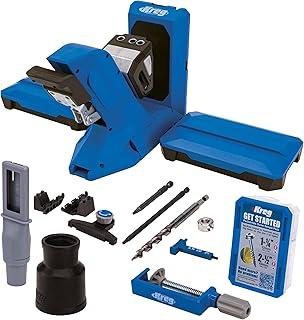
Kreg Pocket-Hole Jig 720PRO (KPHJ720PRO)
Kreg's best benchtop jig — the clamp auto-adjusts to your material, so you can drill a stack of parts quickly and consistently.
$149.00
View on AmazonIf you're building cabinets, furniture, or face frames on a regular basis, the 720PRO is the one to buy. Its biggest feature is the self-adjusting clamp: set the material thickness once and the clamp automatically grips each new piece with the right pressure, so you can load, clamp, drill, and move to the next part quickly. That's where the time savings come from when you're drilling a stack of parts.
It also has extension wings to support longer boards, a dust collection port, and a removable drill guide you can take off the base for portable use, which gives you some of the 320's flexibility. Owners consistently describe it as a big step up from the older K4 in speed and ease of use.
The drawbacks: it's a benchtop tool, so it's bigger and heavier to carry around a jobsite, and it costs $149. If you only drill pocket holes a few times a year, it's more jig than you need.
Best for: cabinet and furniture builders, finish carpenters with a shop, and anyone who drills pocket holes every week.
Kreg K4 Pocket Hole Jig
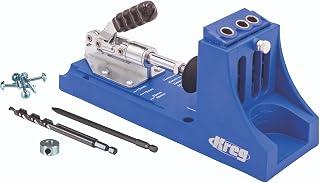
Kreg Pocket Hole Jig K4
The jig that made Kreg famous. Still works fine, but the 720PRO has replaced it at a similar price.
$99.00
View on AmazonThe K4 is the jig most carpenters learned on, and plenty of them are still in service. It's a three-hole benchtop jig with a removable drill guide, and it does the job reliably. There's nothing wrong with it.
The problem is that it's priced close to the 720PRO, and the 720PRO is faster and easier to use — mostly because the K4's clamp has to be adjusted manually for each material thickness. Unless you find a K4 deeply discounted or used, the extra money for the 720PRO is worth it.
Best for: buyers who find one on sale or used — or who already own one and are wondering whether to upgrade. If yours works, keep using it.
Kreg Foreman DB210 Pocket-Hole Machine
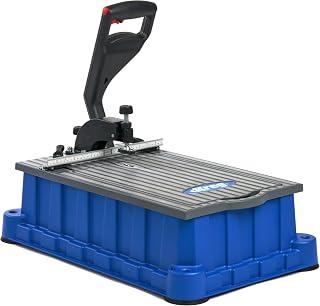
Kreg DB210 Foreman Pocket-Hole Machine
An electric pocket hole machine — pull a lever and it drills the pocket. Built for shops drilling hundreds of holes a week.
$449.00
View on AmazonThe Foreman isn't a jig — it's a machine with its own motor. You set the material against the fence, pull the lever, and it clamps and drills the pocket in one motion. There's no drill to pick up and no clamp to set, which makes it dramatically faster for production work.
For a cabinet shop or a contractor doing a lot of built-ins, the Foreman pays for itself in labor quickly. Owners say it's accurate and consistent, and it has a 4.7-star rating.
The drawbacks are obvious: at $449, it's three times the price of the 720PRO, it needs a power outlet and a bench, and it's not something you carry around a jobsite. Unless pocket holes are a significant part of your work week, it's overkill.
Best for: cabinet shops, millwork shops, and contractors doing high-volume built-in work.
Don't forget the screws
Whichever jig you buy, the screw matters as much as the hole. Kreg's general rule is coarse-thread screws for softwoods, plywood, and MDF, and fine-thread screws for hardwoods like oak and maple. Using the wrong thread is the most common cause of split boards and stripped joints. Match the screw length to your material thickness using the chart that comes with the jig.
Bottom Line
For most carpenters, the decision comes down to where you work:
- On a jobsite, doing installs and built-ins: the Kreg 520PRO.
- In a shop, building cabinets or furniture regularly: the Kreg 720PRO.
- Occasionally, for repairs and tight spots: the Kreg 320.
- Running a production shop: the Kreg Foreman.
If you can only buy one and you work in both places, the 720PRO is the most versatile — its drill guide comes off the base for portable work. And if you're still on the fence between Kreg and a cheaper brand, read our Kreg vs VEVOR comparison before you buy.