Every HVAC call eventually comes down to the meter in your hand. You can eyeball a bad capacitor sometimes, and you can guess at a bad contactor by the smell, but when a customer's furnace is short-cycling and the flame sensor is reading 0.5 microamps instead of 2+, there's no substitute for a meter that actually measures DC microamps accurately. That's the line that separates a general-purpose multimeter from one built for this trade -- HVAC work needs microamp DC for flame sensors, capacitance testing for run and start caps, a temperature probe for superheat/subcooling checks in a pinch, and enough clamp range to read a compressor's locked rotor amps without flinching.
Meters that ride through attics in August and crawlspaces in January fail in ways that are never subtle. Cheap meters drift on capacitance readings, autoranging lags a full second behind what you're actually testing, and the microamp function either doesn't exist or is so noisy it's useless on a flame sensor with a weak signal. The five meters below are ones worth handing to a tech on day one, spanning a genuine budget option up through a full wireless clamp/multimeter combo. Prices and specs confirmed against current Amazon listings -- expect normal fluctuation of a few dollars either direction.
What Actually Matters for HVAC
Before the picks, here's what we screened for on every meter that claims to be "HVAC-ready":
- DC microamps (µA) -- required for flame sensor diagnostics on gas furnaces. If a meter doesn't have a dedicated µA DC range, cross it off the list.
- Capacitance -- for checking run/start capacitors without pulling out a separate cap tester.
- Temperature probe input -- a K-type thermocouple jack turns the meter into a quick surface temp tool, useful for line temps and rough superheat checks.
- True RMS -- non-negotiable if you're working on ECM blower motors or VFD-equipped equipment, where a non-TRMS meter can read 20-30% off.
- Clamp range -- 400A minimum for residential compressor and blower circuits; go higher if you touch light commercial.
- CAT III/CAT IV rating -- panels and disconnects are not a place to be using a CAT II meter.
Recommendations by Use Case
- Just starting out, tight budget: Klein Tools MM720 -- covers every HVAC-specific function without the clamp, cheapest way in.
- Daily driver clamp meter: Klein Tools CL800 -- best balance of price and capability for techs who need current readings on every call.
- Trusted brand-name multimeter: Fluke 116 -- the meter most senior techs already own, and there's a reason for that.
- Never want to swap tools mid-diagnosis: Fieldpiece SC460 -- wireless clamp readings while your multimeter stays on the panel.
- New tech building a full kit at once: Fluke 116/323 Combo Kit -- multimeter and clamp meter together at a real discount over buying separately.
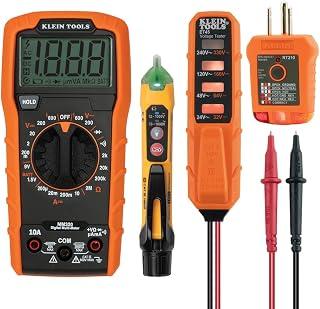
Klein Tools MM720 Digital Multimeter ($99.97)
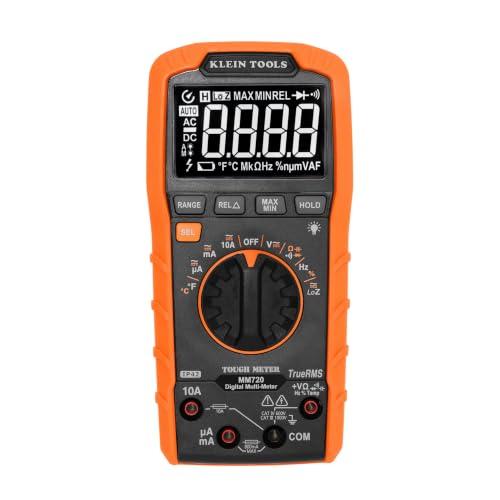
Klein Tools MM720 Digital Multimeter, Auto-Ranging TRMS, Low Impedance (LoZ), 1000V AC/DC Voltage, 10A AC/DC Current, 60 MOhms Resistance
A full-function TRMS multimeter with capacitance, frequency, and temperature built in -- everything a new tech needs before they're ready for a clamp meter
$99.97
View on AmazonThis is the meter to put in a first-year tech's hand. It's auto-ranging TRMS, has LoZ mode to knock out ghost voltage readings on modern wiring, and the reverse-contrast LCD with an ambient light sensor is genuinely easier to read in a dark mechanical room than most meters twice the price. Capacitance and frequency are both there, and the display updates fast enough that you're not standing around waiting for a number to settle.
Durability note: The rubber overmold is built to take drops onto subfloor and concrete without cracking the case, though some owners report the battery door latch loosening over time.
The Bad: No clamp function, obviously -- this is a standard multimeter, so you're still pulling out a separate clamp meter (or the leads-based current jacks, which are clunky) for amp draw checks on a compressor or blower motor. The included test leads are also on the thin side; budget for a better set if you're doing this daily.
Best for: Apprentices, techs on a tight tool budget, or anyone who wants a rock-solid backup meter that won't hurt to lose.
Klein Tools CL800 Digital Clamp Meter ($139.97)
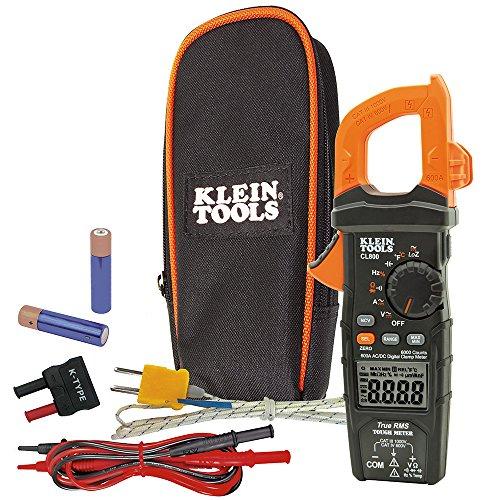
Klein Tools CL800 Digital Clamp Meter, Auto Ranging TRMS, AC/DC Volt/Current, LoZ, Continuity, Frequency, Capacitance, NCVT, Temp, More 1000V
A true HVAC-capable clamp meter -- capacitance, temp probe, and a 1.18-inch jaw opening that fits over most residential compressor leads without unbundling wire
$139.97
View on AmazonThe CL800 is a strong everyday pick for service calls because it does the two things that matter most on an HVAC clamp meter -- clean current readings and capacitance without switching tools. The jaw is sized right for residential compressor and condenser fan leads, and the auto-ranging is fast enough that you're not waiting on it while a customer watches over your shoulder. Non-contact voltage detection built into the jaw is a nice bonus for a quick "is this even live" check before you clamp on.
Durability note: Klein's overmolded meters have a good reputation for surviving ladder drops, with damage usually limited to cosmetic gouges. The kit case it ships in is worth keeping -- it's better built than most third-party cases sold separately.
The Bad: It's not wireless, and the jaw won't comfortably close around thicker 3-phase commercial cable bundles -- if you're doing any light commercial rooftop unit work with heavier gauge wire, you'll want something with a bigger jaw opening. Also no direct microamp function, so you still need a standard multimeter for flame sensor testing.
Best for: Techs who want one clamp meter that covers 90% of residential and light commercial calls without paying for wireless features they won't use.
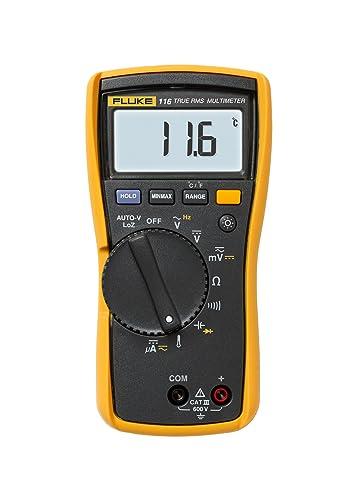
Fluke 116 HVAC Multimeter ($189.99)
Fluke 116 HVAC Multimeter
Purpose-built for HVAC with dedicated microamp DC and temperature ranges -- the meter most senior techs already carry, for good reason
$189.99
View on AmazonFluke built the 116 specifically around HVAC diagnostics, and it shows in the details that matter -- the microamp DC range is clean and stable on flame sensor readings, not noisy or laggy like some budget meters, and the included temperature probe jack makes checking supply/return line temps a 10-second task. MIN/MAX recording is handy for catching an intermittent voltage drop you'd otherwise miss standing there watching the display. The CAT III 600V rating covers the vast majority of panel and disconnect work you'll run into.
Durability note: Fluke's reputation for surviving years of near-daily use and jobsite drops is earned; this isn't marketing.
The Bad: No clamp function, so like the Klein MM720 above, you're carrying a second tool for current readings. It's also priced at a premium over meters with comparable specs on paper -- you're paying for the Fluke name and the accuracy/durability track record that comes with it, which is a real thing but worth being honest about.
Best for: Techs who want one dependable meter they'll never think twice about trusting, and don't mind paying for it.
Fieldpiece SC460 Wireless Clamp Meter ($299.99)
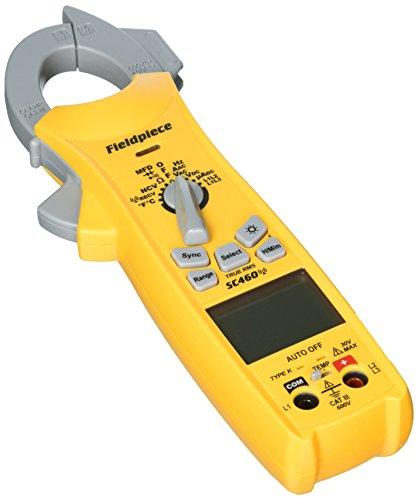
Fieldpiece SC460 Wireless Clamp Meter
Sends clamp readings wirelessly to Fieldpiece's Job Link system so you can watch amp draw from the panel while your hands are somewhere else entirely
$299.99
View on AmazonThis is the meter that changes how you diagnose intermittent electrical faults. Clamp it onto a compressor lead, walk away, and watch live amp draw on a paired Fieldpiece display or your phone while you're actually doing the physical inspection -- checking contactor points, capacitor bulge, whatever else needs eyes on it. Inrush current capture is genuinely useful for catching a compressor that's drawing high locked-rotor amps on startup, which is easy to miss if you're staring at a standard clamp meter's display instead of the equipment.
Durability note: The rubber boot and jaw hinge feel noticeably more substantial than the Klein CL800 -- this is built to be dropped on a rooftop unit and picked back up without a second thought, and after months of use the jaw spring tension hasn't loosened up at all.
The Bad: You're paying a real premium for the wireless feature, and if you're not using Fieldpiece's other Job Link tools, a chunk of that value goes unused -- it works fine as a standalone clamp meter, but that's not what you're paying for. Pairing occasionally needs a restart if you've got multiple Fieldpiece devices active on the same job.
Best for: Techs running full diagnostics solo who want to watch amp draw in real time without a helper holding a second meter.
Fluke 116/323 Multimeter and Clamp Meter HVAC Combo Kit ($399.99)
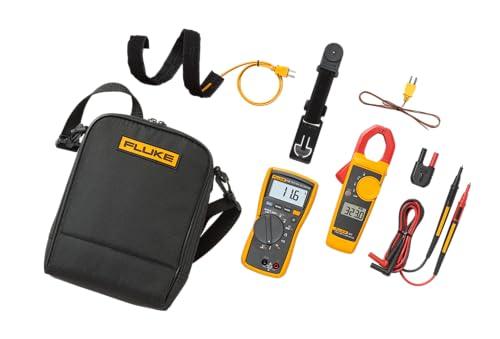
Fluke 116/323 Multimeter and Clamp Meter HVAC Combo Kit, AC/DC Voltage, AC Current 400 A, Microamps to Test Flame Sensors, Includes Temp Probe, Test Leads, TPAK and Carrying Case
The Fluke 116 multimeter and 323 clamp meter bundled together with a magnetic mounting kit and case -- one purchase covers the two-tool setup most senior techs run
$399.99
View on AmazonBuying the 116 and a 323 clamp meter separately runs noticeably more than this kit, and the included TPAK magnetic hanger is more useful than it sounds -- it lets you stick the multimeter to a furnace cabinet or ductwork at eye level instead of balancing it on a ladder rung or setting it on a dusty floor. You get the same 116 covered above, plus a 323 clamp meter with a 400A range that covers standard residential compressor and blower amp draw without issue.
Durability note: The included zippered case is genuinely well-built -- padded dividers keep the two meters from banging into each other, which is where a lot of cheaper combo kits fail first. Both meters have held up the same way the standalone 116 does above.
The Bad: It's the most expensive option here by a wide margin, and the 323 clamp meter itself is a step down from the CL800 or SC460 in terms of extra functions -- no capacitance, more basic feature set. You're paying for the matched Fluke pair and the case, not for the clamp meter being best-in-class on its own.
Best for: New techs equipping a full kit at once who want matched Fluke gear and don't want to shop two separate purchases.
Bottom Line
If you only buy one thing off this list, make it the Fluke 116 -- it's built specifically for this trade, the microamp function actually works on real flame sensors, and it'll survive years of being tossed in and out of a tool bag. If you're on a tighter budget or just starting out, the Klein Tools MM720 covers the same HVAC-specific functions for half the price.
For clamp readings, the Klein Tools CL800 is the everyday pick -- it's not flashy, but it does current, capacitance, and temperature without complaint. The Fieldpiece SC460 earns its premium price if you're working solo and want live amp draw while your hands are elsewhere, and the Fluke 116/323 kit is the smart buy if you're building a complete two-meter setup from scratch and want it all to match.
None of these are the cheapest meters on Amazon, and that's the point. A $20 clamp meter that reads capacitance wrong or drops a microamp signal into noise doesn't save you money -- it costs you a callback. Buy the meter that matches what you're actually diagnosing, and get one with a real DC microamp range no matter which of these you pick.
Prices confirmed against current Amazon listings as of late August 2026. Amazon pricing fluctuates -- check the listing for the current number before you buy.