Best Tools for New Electrician Apprentices 2026
Nobody hands you a checklist on your first day. You just get a text the night before -- "be at the shop at 6:30, bring your tools" -- and you stand in the aisle at the hardware store with a credit card that already hurts, trying to guess what "your tools" means. I've been that guy, and I've also been the journeyman watching a new apprentice dump $600 into a rig he didn't need in his first month, half of which sat in the truck untouched for a year.
This isn't a "buy the whole wall" list. It's the five things that actually get used every single day of a first-year apprenticeship, picked for a budget that assumes you're also paying for boots, a hard hat, and gas money. Total for all five: under $170. Everything else -- your linemans, your channellocks, your impact driver -- comes later, usually because a journeyman tells you exactly which one to get after watching you struggle with the wrong one.
Day One Essential: A Pouch That Actually Fits Your First Tools
You don't need a full rig with a suspended belt and a dozen bags before you've even learned where the panel is. You need something that clips on, holds what you're carrying today, and doesn't fall apart in three months.
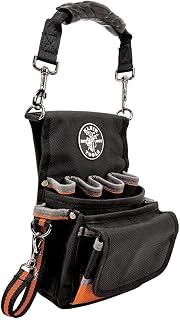
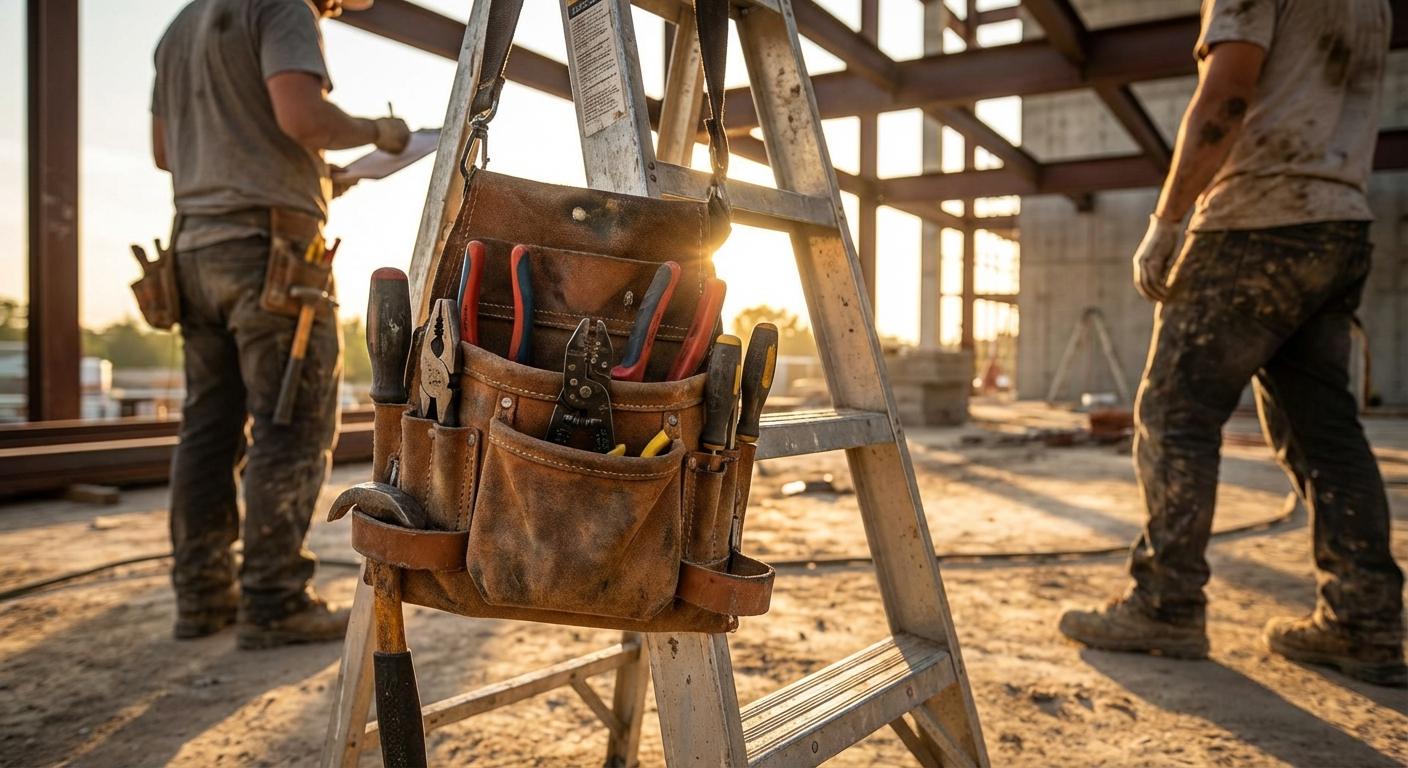
Klein Tools 5242 Tool Pouch, Tradesman Pro Tool Pouch with Electrical Tape Thong, Reinforced Bottom, 9 Pockets
A small, honest tool pouch that clips onto any belt and carries exactly what a first-year needs -- nothing you have to grow into.
$39.99
View on AmazonWhat's good: the 1680d ballistic weave shrugs off the abuse of getting tossed in and out of a truck bed twice a day, and the reinforced bottom means it doesn't go soft and floppy after a few weeks like the $15 no-name versions do. The tunnel loop fits a standard 2-inch belt so it rides on whatever you're already wearing, and the tape thong keeps a roll of electrical tape within reach instead of buried in a pocket.
Field-use note: after a few months the shoulder strap padding is genuinely the best part of the pouch -- better than pouches twice the price -- but the bag has a tendency to want to swing forward when you're wearing it cross-body with a full load, especially if you've got a clamp meter riding in the main pocket. You get used to it, but don't expect it to hang perfectly plumb.
Main drawback: nine pockets sounds like a lot until you actually load it with strippers, a stripper/cutter, two screwdrivers, a stubby, and a meter -- it fills up fast, and if your meter is on the larger side (a Fluke 117, for instance) the main compartment is snug. That's fine for an apprentice with a starter kit; it will not fit a full-time residential rig two years from now, and you shouldn't expect it to.
Why it's right for someone starting out: it's cheap enough that if your foreman tells you week two that you're doing this wrong and need a completely different pouch, you haven't blown real money. And it's Klein, so resale or hand-me-down to the next apprentice isn't a problem.
The Tester Kit That Keeps You From Getting Hurt (or Fired)
Before you touch a single wire, you need to know if it's live. This is the one category where I will not tell you to go cheap -- a bad voltage tester doesn't just waste your time, it can kill you. The good news is you don't need three separate meters to start; a combo kit covers what a first-year actually gets asked to check.
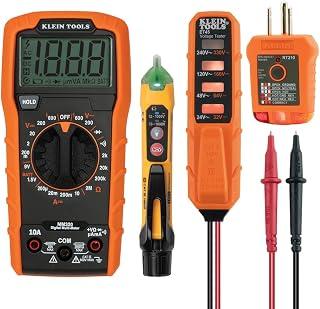
Klein Tools MM320KIT Digital Multimeter Electrical Test Kit
One case with a real multimeter, a non-contact voltage tester, and a receptacle tester -- covers 90% of what a first-year apprentice needs to verify before they touch anything.
$54.99
View on AmazonWhat's good: you get an actual auto-ranging multimeter for voltage, continuity, and resistance checks, plus a separate non-contact tester for the fast "is this dead" check before you strip a wire, plus a receptacle tester for finish work. Three tools that would each cost $15-25 on their own, bundled with a case that keeps them from getting lost in the bottom of your pouch.
Field-use note: the case is the unsung hero here. It's the difference between your tester surviving your first year and it disappearing into a five-gallon bucket somewhere on a jobsite. The non-contact tester's beep is loud enough to hear over a running compressor, which matters more than it sounds like it would.
Main drawback: the included multimeter is a solid basic unit, not a Fluke. It doesn't have a lot of the safety-rated overload protection that the $150+ meters carry, so you shouldn't be using it around service panels or anything above 240V without a journeyman standing next to you anyway -- which, as a first-year, you should be doing regardless. Treat this as your learning meter, not your forever meter.
Why it's right for someone starting out: it answers "is it live" and "what's my reading" in one $55 purchase instead of three separate ones, and it's the kit most apprentices I know actually started with before upgrading piece by piece once they knew what they preferred.
The Wire Stripper You'll Wear Out Before You Upgrade
This is the tool your hand is on more than any other in your first year. Get the cheap one that works, not the cheap one that fights you.
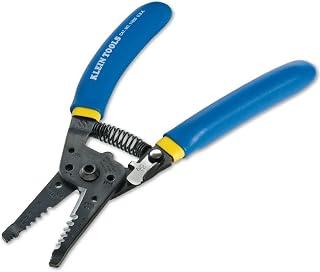
Klein Tools 11055EP Wire Cutter and Stripper, Made in USA, Stranded and Solid Wire Cutter, Cuts Copper
The stripper that's on nearly every apprentice's belt in the first year -- precise gauge holes, a real cutting blade, and a price that doesn't sting if you leave it on a windowsill.
$15.88
View on AmazonWhat's good: the precision-ground stripping holes actually match their gauge markings, so you're not nicking conductors on 12-gauge because the 14-gauge hole was actually cut wide. The shear-type blades cut 6-32 and 8-32 screws cleanly too, which comes up more than you'd expect when you're mounting devices.
Field-use note: I've watched this exact stripper survive a full first year of daily rough-in work -- dropped on concrete, left in a shirt pocket through a wash cycle once, still stripping clean. The spring-loaded self-opening action does eventually loosen up after heavy use, so by month ten it doesn't snap open with quite the same authority it did new.
Main drawback: it's not insulated, so it's not rated for anything close to live work -- that's what your non-contact tester and your journeyman's judgment are for. It's also plastic-handled rather than the rubber over-mold you'll find on Klein's pricier Kurve line, so it's a little less comfortable on a ten-hour day of repetitive stripping.
Why it's right for someone starting out: at under $16 it's basically disposable-grade Klein -- which sounds like a insult until you realize that means you can lose it, sit on it, or leave it at a jobsite without the gut-punch of losing a $50 tool three weeks into the job.
A Screwdriver Set That Won't Get You Sent Back to the Truck
Showing up without the right screwdriver tip on day one is a rite of passage. Don't make it a daily occurrence.
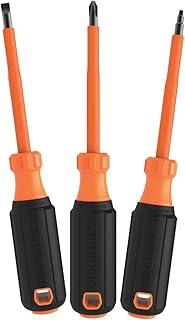
Klein Tools 85073INS Insulated Screwdriver Set, Made in USA, features 1000V Phillips, Slotted and Square Tips, Cushion Grip Handles, 3-Piece
The three tips you'll actually use -- Phillips, slotted, and square -- rated 1000V insulated so you're covered from the first panel you open.
$22.98
View on AmazonWhat's good: 1000V insulation on all three drivers means you're not the apprentice who shows up with a Home Depot bargain-bin driver that has zero rating on it. The cushion grip actually helps on the fortieth device screw of the day, and the Tip-Ident color coding on the handle butt means you can grab the right one out of your pouch without looking twice.
Field-use note: the insulation coating has held up well through a year of use in my experience -- no chipping or cracking at the collar, which is where cheaper insulated drivers usually fail first. The square tip gets more use than you'd expect once you're doing panel work and device terminals that use it.
Main drawback: three tips is genuinely tight. There's no small Phillips for cover plate screws or electronics-sized work, and you will eventually want a 4-in-1 or a small precision driver to fill that gap. It's a starter set, not a complete one -- treat it that way.
Why it's right for someone starting out: it's the minimum viable insulated set, and "minimum viable but actually rated" beats an uninsulated 12-piece set from the bargain bin every time you're working near anything live.
The Tape Measure That Earns Its Spot on Your Belt
You'll use this more than the wire stripper. Get one that survives a truck bed and sticks to steel.
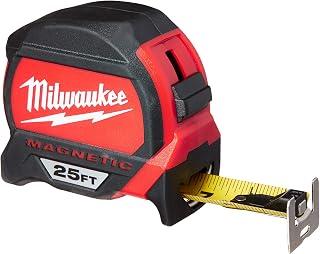
Milwaukee Tool 48-22-7125 Magnetic Tape Measure 25 ft x 1.83 Inch
A magnetic-tip 25-footer that sticks to conduit and steel studs so you can measure one-handed -- the small feature that saves you real time every day.
$32.95
View on AmazonWhat's good: the magnetic tip is the whole reason to buy this over a generic 25-footer. It grabs onto EMT and steel studs so you can pull a measurement solo instead of hooking it on a nail or holding it with your teeth. The five-point reinforced frame and nylon-bonded blade have held up to being dropped off ladders more times than I'd like to admit.
Field-use note: standout (how far the blade extends horizontally before it collapses) is solid at around 12 feet, which is enough for most conduit runs and box layouts without a second set of hands. The blade lock is firm enough that it doesn't creep back in on you mid-measurement, which matters more than it sounds like once you've used a tape that does.
Main drawback: at 16 ounces it's noticeably heavier on your belt than a basic 25-footer, and it's not the cheapest tape on this list relative to what it does. If you genuinely can't stretch the budget, a $15 basic tape measures the same numbers -- you're paying here for the magnet and the durability, not extra features.
Why it's right for someone starting out: it's the one item on this list that isn't electrical-specific, but it's the one you'll clip and unclip from your belt fifty times a day, every day, for your entire career. Worth spending a little more on now so you're not replacing it in six months.
What I'd Skip For Now
An impact driver, a full suspension tool belt rig, a clamp meter, insulated pliers and a set of nut drivers -- all good tools, none of them things you need before your first paycheck clears. Most shops have a loaner impact driver, and most journeymen have strong, specific opinions about which linemans and channellocks you should buy once they've seen how you work. Let that guide the next purchase instead of guessing now.
Bottom Line
This kit -- pouch, tester, stripper, screwdrivers, tape measure -- runs about $167 total, and it covers what actually gets used in a first-year apprenticeship: verifying voltage, stripping and terminating wire, driving screws on devices and panels, and measuring rough-in. It's not a forever kit. You'll outgrow the pouch, upgrade the meter, and probably buy a second stripper before year two. But it gets you through day one without either overspending or showing up empty-handed, and every piece on this list is something I've personally watched survive a real first year on real jobsites.