Best Insulated Bibs and Coveralls 2026: Carhartt vs Dickies vs Berne
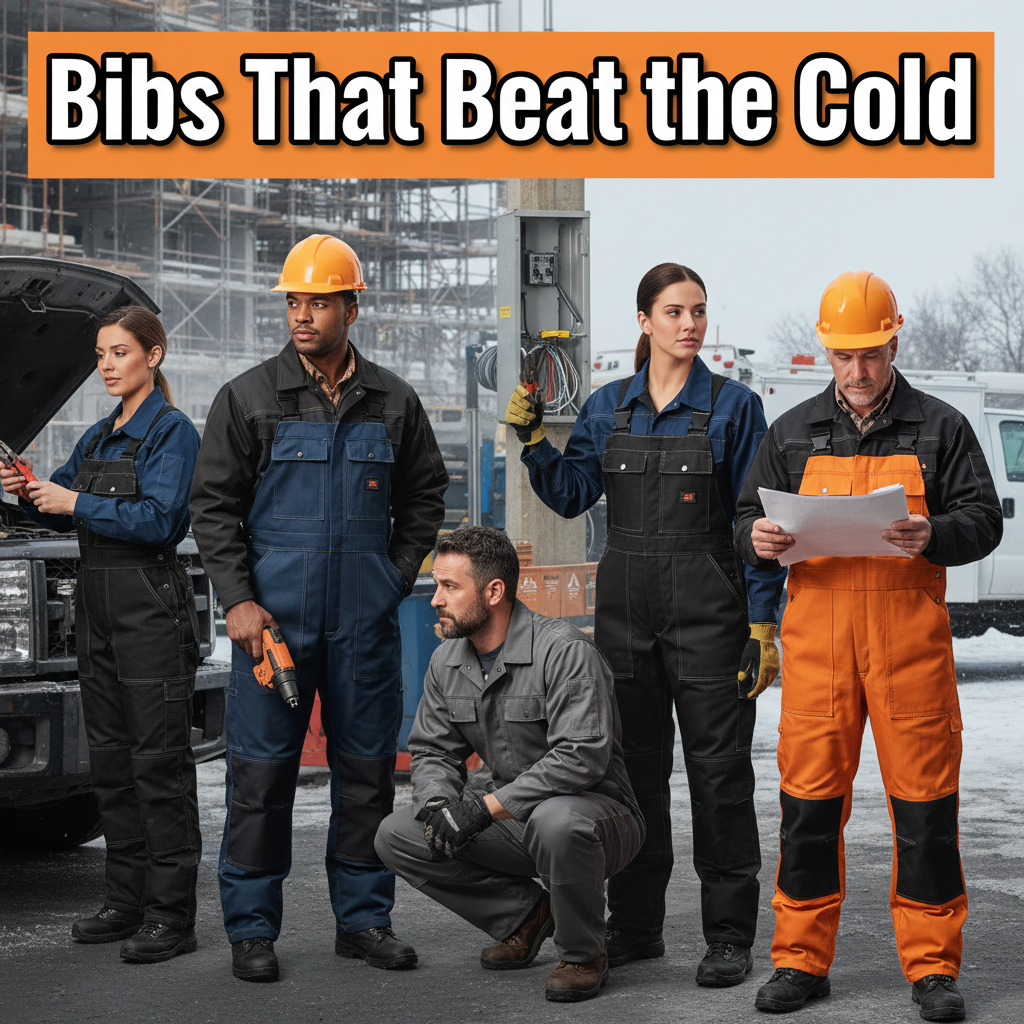
Once the temperature drops into the 20s, insulated bibs stop being optional for anyone working outside. A good pair keeps your core and legs warm without the bulk of layered pants, protects your knees when you're kneeling on frozen ground, and covers the gap at your lower back where a jacket rides up every time you bend over. That gap is where most people lose heat on a cold jobsite.
There are really three brands most tradespeople consider: Carhartt, Dickies, and Berne. Carhartt is the default — the one everyone knows and most crews wear. Dickies is usually a little cheaper. Berne is the less famous Ohio-based workwear brand that a lot of farmers and utility crews swear by. We compared the most popular insulated bibs and one coverall from each, based on materials, construction, and long-term owner feedback.
Bibs or coveralls?
Before picking a brand, decide which style you need:
- Bib overalls cover your legs and chest and are the more popular choice. You wear your own jacket on top, so you can shed the jacket when you warm up and still keep your core covered. They're easier to adjust through the day.
- Coveralls cover everything in one piece. They're warmer because there's no gap at the waist, and they're better at keeping out snow and wind. But they're harder to vent when you warm up, and taking them off for a bathroom break is a production.
For most construction work, bibs are the more practical choice. Coveralls make the most sense for people who are outside and relatively still — equipment operators, flaggers, and anyone working in extreme cold.
Carhartt Men's Firm Duck Insulated Bib Overall
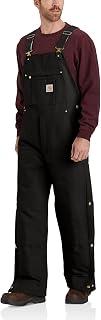
Carhartt Men's Firm Duck Insulated Bib Overall
The standard insulated bib on American jobsites — tough firm duck, warm quilted lining, and leg zippers so you can get them on over boots.
$119.99
View on AmazonThis is the bib most people mean when they say "Carhartts." It's made from Carhartt's firm cotton duck — stiff when new, but extremely abrasion-resistant — with a quilted insulated lining. Leg zippers let you pull them on and off without taking your boots off, which is a bigger deal than it sounds when you're changing in a cold truck, and the double-front knees hold up to kneeling.
With a 4.7-star rating across thousands of reviews, owners consistently report getting multiple winters out of a pair. The firm duck breaks in over a few weeks and gets more comfortable with wear.
The drawbacks: firm duck is stiff and noisy out of the box, and the bibs are heavy. They're also not waterproof — the duck sheds light snow, but if you're kneeling in slush, the knees will eventually soak through. Sizing can be confusing because Carhartt sells multiple fits, so check the size chart carefully and consider the "relaxed" or "loose" fit if you plan to wear layers underneath.
Best for: anyone who wants the most proven insulated bib for general construction work.
Carhartt Men's Washed Duck Insulated Bib Overall
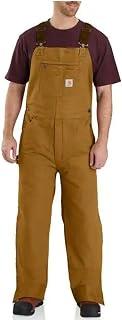
Carhartt Men's Washed Duck Insulated Bib Overall
The same idea as the firm duck bib, but pre-washed so it's softer and more comfortable from day one — and usually cheaper.
$83.99
View on AmazonThe washed duck version skips the break-in period. The fabric is pre-washed, so it's softer and quieter than the firm duck and moves better when you're climbing or crouching. It's also often listed for less than the firm duck bib, which makes it a strong value if you want Carhartt's construction without paying full price.
Owners who don't like the stiffness of firm duck tend to prefer this version, and it carries a 4.6-star average.
The drawbacks: washed duck is a little less abrasion-resistant than firm duck over the long run, so if you're working on rough surfaces — masonry, steel, rebar — the firm duck will probably last longer. Like the firm duck, it isn't waterproof.
Best for: people who want Carhartt's insulated bib but hate the break-in period, and anyone shopping on price.
Dickies Men's Premium Insulated Duck Bib Overall
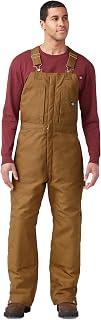
Dickies Men's Premium Insulated Duck Bib Overall
A solid insulated duck bib that competes directly with Carhartt for a bit less money.
$99.99
View on AmazonDickies' insulated duck bib is built along the same lines as Carhartt's: cotton duck shell, quilted insulated lining, leg zippers, and plenty of pockets. For most people, the warmth and features are comparable, and it usually costs less than the Carhartt firm duck bib.
Owners like the fit and warmth, and it holds a 4.6-star rating. Some people find Dickies' sizing fits their build better than Carhartt's, so if Carhartt bibs never fit you right, it's worth trying.
The drawbacks: long-term owner feedback suggests the Dickies duck isn't quite as heavy or as durable as Carhartt's firm duck, and the zippers and hardware are a common complaint after heavy use. For occasional winter work, it's a good value. For daily abuse, Carhartt has the edge.
Best for: people who want an insulated duck bib for less than Carhartt, or who find Dickies' fit works better for them.
Berne Men's Heritage Insulated Duck Bib Overall
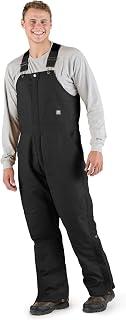
Berne Men's Heritage Insulated Duck Bib Overall
The underrated pick — heavy duck, warm lining, and a loyal following among farmers and utility crews, usually for less than Carhartt.
$96.72
View on AmazonBerne is a family-owned workwear company based in Ohio, and it doesn't have Carhartt's name recognition — but people who wear Berne bibs tend to stay with them. The Heritage bib uses a heavy cotton duck shell with an insulated lining, and owners consistently describe it as just as warm and durable as Carhartt's, often for a little less money.
It has a 4.6-star average, and owner reviews frequently mention that Berne sizing is roomier than Carhartt's, which makes layering easier.
The drawbacks: Berne isn't as widely stocked in stores, so if you want to try on a pair first, it's harder to find. Sizes and colors also sell out on Amazon more often once the cold weather hits. And like the other duck bibs here, it isn't waterproof.
Best for: anyone who wants Carhartt-level warmth and durability without paying for the name — especially people who prefer a roomier fit.
Carhartt Men's Yukon Extremes Loose Fit Insulated Biberall
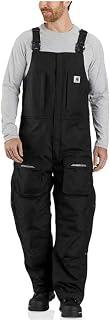
Carhartt Men's Yukon Extremes Loose Fit Insulated Biberall
Carhartt's coldest-weather bib — heavier insulation and a tougher shell for long days in serious cold.
$209.99
View on AmazonYukon Extremes is Carhartt's line built for the coldest working conditions. Compared to the standard firm duck bib, it uses a tougher, more weather-resistant shell and heavier insulation, and it's cut in a loose fit to leave room for layers. It's the bib for people working in the northern U.S. and Canada through January and February, not just the first cold snaps of November.
Owners in the coldest climates rate it highly, at 4.7 stars, and consistently say it's noticeably warmer than the standard duck bib.
The drawbacks: at around $210, it costs nearly twice as much as the standard Carhartt bib, and it's overkill for anyone working in moderate winters — you'll overheat during physical work. It's also bulkier, which can make climbing ladders and working in tight spaces more awkward.
Best for: people working outside in extreme cold, especially if they're not moving much — equipment operators, flaggers, and site supervisors in northern climates.
Carhartt Men's Yukon Extremes Insulated Coverall
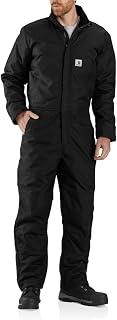
Carhartt Men's Yukon Extremes Insulated Coverall
If you want a coverall instead of a bib, this is the warmest option from Carhartt — full coverage with no gap at the waist.
$269.99
View on AmazonThe Yukon Extremes coverall takes the same heavy insulation and tough shell as the biberall and makes it one piece. Because there's no gap at the waist, it's the warmest option here, and it keeps out snow and wind better than a bib-and-jacket combo.
For people who spend long hours outside in serious cold without much movement, a coverall like this is hard to beat.
The drawbacks: it's the most expensive option on this list, and coveralls are harder to vent when you warm up. You can't take off a jacket to cool down. Bathroom breaks are also more of a hassle. For most physical construction work, a bib plus a separate jacket is more practical.
Best for: equipment operators, flaggers, and anyone who's outside and still for long hours in hard cold.
Sizing tips
Insulated bibs are one of the easiest pieces of workwear to size wrong. A few rules of thumb:
- Size for layers. You'll be wearing a base layer and maybe a sweatshirt under them. If you're between sizes, size up.
- Check the inseam. Bibs that are too short ride up when you crouch and let cold air in at your boots. Most come in multiple inseams.
- Try a squat. If the bib pulls tight across your back or crotch when you crouch, it's too small for real work.
- Fit varies by brand. Berne tends to run roomier than Carhartt, and Carhartt offers several fits. Always check the brand's size chart instead of assuming your usual size.
Bottom Line
For most people working outside this winter, the Carhartt Firm Duck Insulated Bib is still the standard for a reason — warm, tough, and built to last several seasons. If you want to save some money, the Berne Heritage bib is the best value and just as warm, and the Carhartt Washed Duck bib gives you Carhartt construction without the break-in period.
If you work in serious cold and don't move much, step up to the Carhartt Yukon Extremes biberall or coverall. Pair your bibs with a good jacket from our guide to the best heated jackets for working outside, and see our picks for winter work gloves to finish off your cold-weather setup.