Best Winter Work Gloves for Construction 2026: 6 Picks for Cold, Wet Jobsites
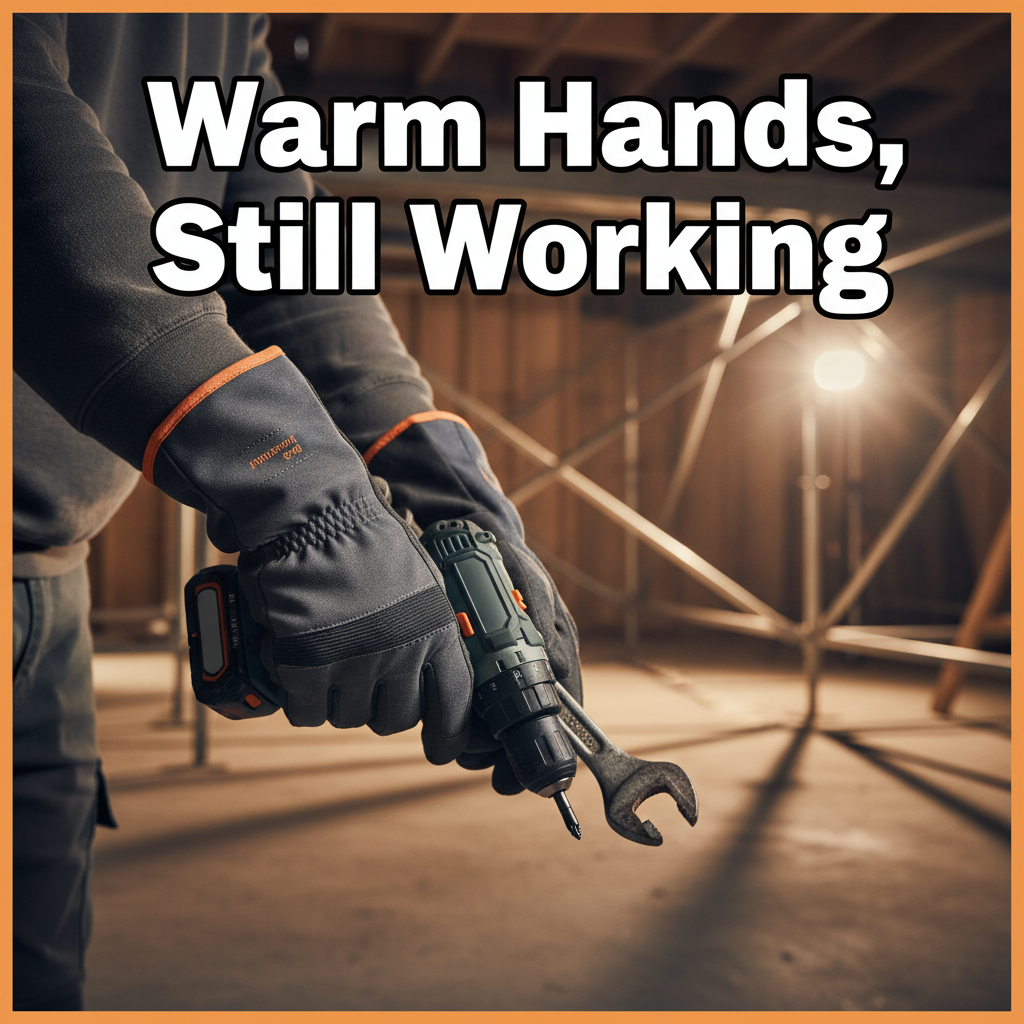
Every winter on a jobsite plays out the same way. The first real cold morning, half the crew shows up in whatever gloves were in the truck, and by 9 AM they've pulled them off to start a screw, pick up a fastener, or work a tape — and their hands never really warm back up after that. Cold hands aren't just miserable. They're slower, clumsier, and more likely to drop something or slip on a tool, which is how winter turns into the season of pinched fingers and dropped materials.
The trouble is that "warm" and "able to do actual work" pull in opposite directions. The thickest insulated glove is useless if you have to take it off every time you touch something smaller than a 2x4. So instead of ranking these by warmth alone, we sorted them by what kind of cold-weather work they're built for: fine dexterity, wet work, heavy material handling, or standing still in real cold.
We picked these six based on construction and materials, manufacturer specs, and long-term owner feedback from people wearing them through full winters. Prices are what Amazon listed when we put this together and move around a lot in the fall.
How to pick a winter work glove
A few things matter more than the marketing on the package:
- Insulation type and weight. Thinsulate and similar synthetic insulations stay warm in a thinner layer than fleece or foam, which is what lets a glove stay warm without turning into an oven mitt. More grams means warmer and bulkier.
- Waterproof vs. water-resistant. A waterproof glove has a membrane insert that keeps water out. A water-resistant glove sheds a little rain or snow but soaks through if you're handling wet material. Once insulation gets wet, it stops working, so this matters more than people think.
- Palm material. Leather (especially pigskin and goatskin) holds up to abrasion and stays more flexible after getting wet. Latex and nitrile coatings give much better grip on wet or icy material and are cheap enough to replace often.
- Cuff style. Knit cuffs seal out wind and snow and keep the glove on. Gauntlet and safety cuffs come off faster and are easier to wear over a jacket sleeve.
One practical tip: most experienced crews own two kinds — a thinner, high-dexterity glove for the work itself, and a heavy insulated glove for standing around, running equipment, or warming back up. Trying to make one glove do both is how people end up cold and frustrated.
Carhartt Men's Waterproof Insulated Knit Cuff Glove
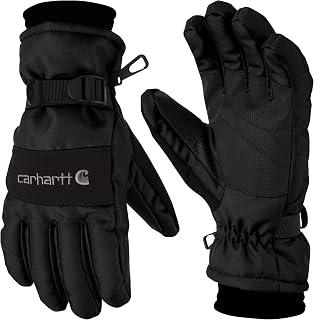
Carhartt Men's Waterproof Insulated Knit Cuff Glove
The best all-around winter work glove for most people — insulated, waterproof, and still flexible enough for general construction work.
$32.99
View on AmazonThis is the glove you'll see on half the crews working outside in January, and for good reason. It's insulated, it has a waterproof insert so it doesn't soak through when you're handling wet lumber or snow-covered material, and the knit cuff seals out wind and keeps snow from packing into the wrist when you reach into a pile. With more than 37,000 Amazon ratings averaging 4.6 stars, it's one of the most widely worn winter work gloves out there.
Owner feedback is consistent on the strengths: warm enough for most northern winter days when you're moving, with a grippy palm that handles lumber and tools without much slipping. It's not a precision glove — you won't be picking up small screws in it — but for carrying, framing, and general labor, most people can keep it on all day.
The drawbacks: the waterproof insert means it doesn't breathe much, so if you're working hard your hands will get sweaty, and a sweaty glove is a cold glove once you stop moving. It also takes a long time to dry overnight. If you can, rotate two pairs. Long-term owners also report the palm grip wearing smooth after a season of heavy material handling.
Best for: general construction workers who need one warm, waterproof glove they can wear for most of the day.
SHOWA 451 Insulated Latex-Coated Work Glove
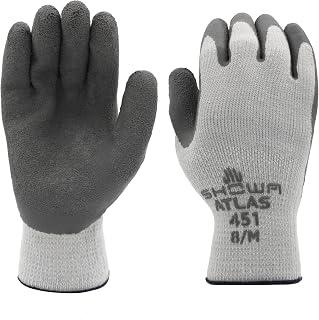
SHOWA 451 Insulated Work Gloves, Latex Coated with Rough Grip
A cheap, grippy, surprisingly warm insulated glove that keeps enough dexterity to do real work. Buy them by the dozen.
$7.99
View on AmazonThe SHOWA 451 (sold for years as the Atlas Therma-Fit) is the glove a lot of tradespeople quietly swear by and never talk about, because it's not exciting — it's a seamless knit shell with a brushed thermal liner and a rough-finish natural rubber latex coating on the palm and fingers. That rough latex grip is the whole story: it holds onto wet, icy, or muddy material far better than leather does, and the glove is thin enough that you can still pick up fasteners and run a tape.
At under $10 a pair, it's the glove you can afford to keep a stack of in the truck and swap out at lunch when the first pair gets wet. Owners in cold-storage, roofing, and outdoor construction rate it highly, and it's one of the most commonly recommended budget winter gloves.
The drawbacks: the back of the hand is uncoated knit, so it's not waterproof and wind cuts through it when you're standing still. It's warm while you're working, not warm while you're waiting. And it's not built to last — expect the coating to crack and the fingertips to wear through over a few weeks of heavy use. That's the trade-off for the price.
Best for: anyone handling wet or icy material who needs grip and dexterity more than maximum warmth — roofers, masons, concrete crews, and laborers.
Kinco 1938 Lined Hi-Vis Grain Pigskin Glove
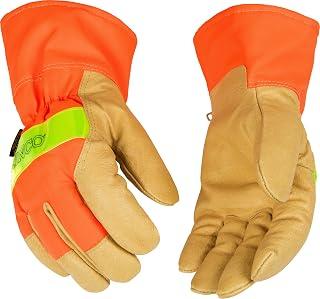
Kinco 1938 Lined High Visibility Grain Pigskin Glove
A classic lined pigskin work glove with hi-vis color — tough, warm, and it stays soft after getting wet.
$24.99
View on AmazonKinco's lined pigskin gloves have been a winter staple for ranchers, linemen, and construction crews for decades, and the 1938 is the hi-vis version. Pigskin is the right leather for a winter glove: it's breathable, it holds up to abrasion, and it stays softer than cowhide after it gets wet and dries out. The thermal lining adds real warmth without making the glove too stiff to use.
With a 4.8-star average, owners consistently say it's one of the warmest leather gloves for the money. The hi-vis color is a small but real bonus — it makes hand signals easier for equipment operators to see on dark winter mornings, and the gloves are easier to find when you drop one in the snow.
The drawbacks: leather isn't waterproof. Kinco and most owners recommend treating them with a wax-based leather treatment (Kinco sells its own) to slow water down, but if you're handling wet material all day, they'll eventually soak through. They also need a break-in period and are bulkier than the SHOWA or Mechanix gloves.
Best for: heavy material handling, landscaping, and outdoor work where durability matters more than fine dexterity.
Mechanix Wear ColdWork Original Winter Work Gloves
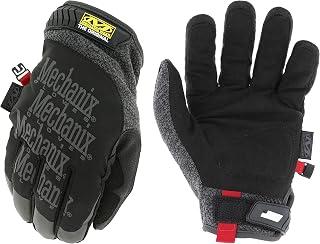
Mechanix Wear ColdWork Original Winter Work Gloves
The best winter glove for fine work — insulated and windproof but thin enough to handle fasteners, wiring, and tools.
$25.49
View on AmazonIf your work involves small parts — electricians terminating wire, HVAC techs working on outdoor units, carpenters doing trim on an unheated job — the ColdWork Original is the glove that lets you keep working without pulling it off. It uses 3M Thinsulate insulation, which stays warm in a thin layer, with a softshell back that blocks wind and a synthetic leather palm that keeps a good feel for what you're holding.
Mechanix built its reputation on the fit — the gloves are cut close to the hand like a mechanic's glove, which is where the dexterity comes from. Owners consistently say it's warm enough for working days in the 20s and 30s as long as you're active.
The drawbacks: it's water-resistant, not waterproof, so it isn't the glove for snow removal or handling wet material. It's also not warm enough for standing still in serious cold, and the synthetic palm wears faster than leather under heavy material handling. Think of it as the working glove, not the warming glove.
Best for: electricians, HVAC techs, mechanics, and finish carpenters who need to handle small parts in the cold.
Carhartt Men's Thermal-Lined Full Coverage Nitrile Glove
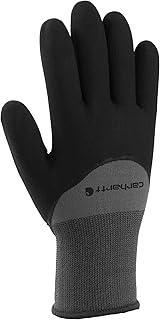
Carhartt Men's Thermal-Lined Full Coverage Nitrile Glove
Fully dipped in nitrile with a thermal liner — the best pick when your hands are going to be wet all day.
$18.99
View on AmazonThe difference between this and the SHOWA 451 is the coverage. Instead of coating only the palm, this glove is dipped in nitrile over the whole hand, so the back of your hand stays dry too. For anyone handling wet concrete forms, snow-covered materials, or running a pressure washer in cold weather, that full coverage is what keeps the liner dry and your hands warm.
Nitrile also holds up better than latex against oils and fuels, which matters for equipment operators and anyone refueling machines on a cold morning. Owners like the grip and say it's comfortable for long days.
The drawbacks: a fully dipped glove doesn't breathe at all, so your hands will get sweaty during hard work, and that sweat turns cold during breaks. The thermal liner is fine for working in the 30s but not enough for hard cold while you're standing still. Some owners also report sizing runs small, so consider sizing up if you're between sizes.
Best for: concrete crews, equipment operators, and anyone whose gloves are going to be wet all day.
Youngstown Glove Waterproof Winter XT
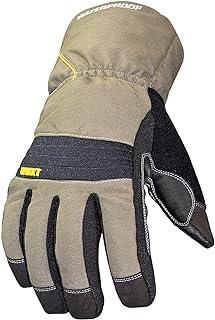
Youngstown Glove Waterproof Winter XT Thinsulate Insulated Work Gloves
The warmest glove on this list — waterproof, heavily insulated, and built for long days in real cold.
$54.56
View on AmazonThe Winter XT is the glove for the days when the forecast high is in the teens and you're going to be outside anyway. It combines Thinsulate insulation with a waterproof insert and a non-slip palm, and it's built heavier than anything else here. It's the kind of glove equipment operators, flaggers, and site supervisors reach for when they're outside for hours without a lot of movement to keep them warm.
Youngstown is a smaller brand than Carhartt, but it has a strong following among linemen and utility crews, and owners consistently say the XT is one of the warmest work gloves they've owned without going to a mitten.
The drawbacks: warmth costs you dexterity. This isn't a glove for handling fasteners or doing detail work, and at more than $50, it's the most expensive pick here. It's also slow to dry if the inside gets wet from sweat, so it's not the best choice for high-exertion work.
Best for: equipment operators, flaggers, superintendents, and anyone who's going to be outside and relatively still in hard cold.
Recommendations by use case
- One glove for most winter construction work: Carhartt Waterproof Insulated Knit Cuff Glove.
- Cheap, grippy, keep a stack in the truck: SHOWA 451.
- Heavy material handling and durability: Kinco 1938 lined pigskin.
- Small parts, wiring, and detail work: Mechanix ColdWork Original.
- Hands wet all day: Carhartt Thermal-Lined Full Coverage Nitrile.
- Hard cold, not much movement: Youngstown Waterproof Winter XT.
Bottom Line
For most people working outside this winter, the Carhartt Waterproof Insulated Knit Cuff Glove is the right place to start — warm, waterproof, and usable for most general construction tasks. But the smartest move is to own two types: a high-dexterity glove like the Mechanix ColdWork or a stack of SHOWA 451s for the actual work, plus a heavier insulated glove like the Youngstown Winter XT for standing around and warming back up.
Whatever you buy, keep a dry backup pair in the truck. Wet insulation doesn't insulate, and swapping into a dry pair at lunch does more for cold hands than spending more on a single pair. If you're putting together your full winter setup, check out our guides to the best winter work boots and the best heated jackets for working outside.