Magid Hawaiian Shirt Style FR Work Shirt Review for Welders 2026
Welders face a daily trade-off: heavy FR gear that provides maximum protection but becomes dangerous in extreme heat, or lighter alternatives that keep you comfortable but may not handle serious arc exposure. Lightweight FR Hawaiian shirts promise CAT 2 protection without the canvas-tarp feel of traditional industrial gear. But can tropical prints deliver real protection for professional welding work?
The answer depends on your exposure level and site requirements. For constant arc exposure and strict compliance environments, these shirts work best as backup gear or base layers. Heavy-duty dual-hazard shirts remain the standard for full-time structural welding and industrial applications.
Here's the breakdown on two shirts representing opposite ends of the FR spectrum: comfort-focused Hawaiian styling versus industrial-grade dual-hazard protection.
The Comfort Play: Lightweight FR Hawaiian
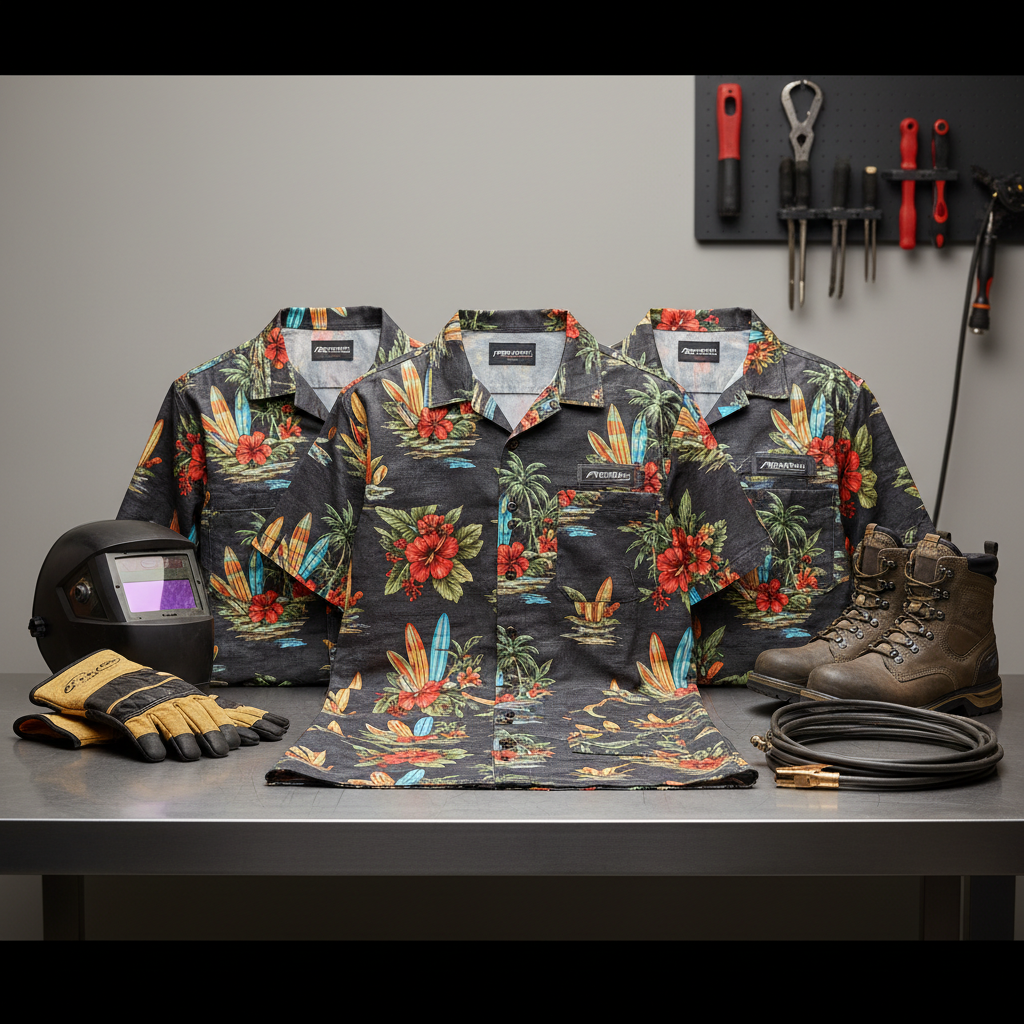
The FR Shirts Printed Paisley/Hawaii Lightweight Pearl Snaps delivers tropical styling with NFPA 2112 CAT 2 certification at $34.39. This shirt targets welders who need FR compliance without the institutional look of standard industrial gear.
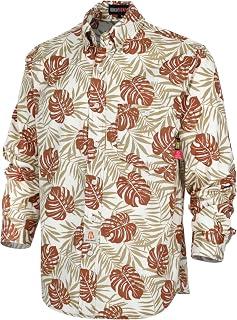
Magid FR Shirts Printed Paisley/Hawaii Lightweight Pearl Snaps/Button Down Flame Resistant NFPA2112 CAT2 Work Shirt
NFPA 2112 certified flame resistant work shirt with unique Hawaiian print design, combining safety compliance with comfortable style for welding professionals
$34.39
View on AmazonConstruction and Features
The 5-6 oz fabric construction makes this shirt significantly lighter than standard 7 oz FR gear. Pearl snaps provide quick closure capability -- critical for fast suiting up or emergency removal after spatter exposure. The relaxed Western cut offers improved shoulder and arm mobility for overhead welding positions and grinder operation.
Professional feedback consistently highlights superior all-day comfort compared to heavier alternatives. The breathable fabric reduces sweat accumulation, which translates to better compliance -- welders actually keep shirts properly buttoned and sleeves down instead of opening protective clothing to cool off.
Performance Reality
This shirt shows accelerated wear patterns under regular welding conditions. Expect visible spatter pinholes within 3-6 months of daily use, concentrated around chest and abdomen areas where sparks typically land. The decorative prints fade noticeably after repeated high-temperature washing cycles required for FR maintenance.
Pearl snaps can loosen or misalign after extensive washing, creating gaps that expose non-FR base layers. Professional welders report 6-9 months of front-line service before appearance deteriorates significantly, though FR properties typically remain intact with proper care protocols.
The Workhorse: Industrial Dual-Hazard Protection
The SBN70DHL Dual-Hazard 7.0 oz FR shirt represents traditional industrial FR construction: heavier fabric, reinforced seams, and dual-certification for complex hazard environments. At $63.99, it costs nearly double the Hawaiian shirt but targets welders requiring maximum durability and compliance documentation.
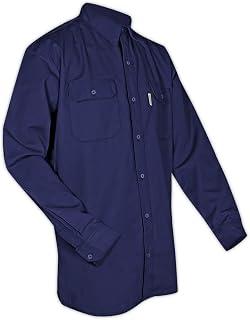
Magid SBN70DHL SBK70DH/SBN70DH Dual-Hazard 7.0 oz. FR 88/12 Work Shirts, Navy, Large, Flame Resistant Cotton Blend
Same premium FR protection as the large size but in XL sizing, offering welders maximum comfort and mobility while maintaining NFPA safety standards
$63.99
View on AmazonIndustrial-Grade Construction
The 7 oz cotton blend fabric provides superior resistance to spatter penetration and mechanical damage from grinding operations. Dual-hazard certification covers both flash fire (NFPA 2112) and arc flash scenarios, meeting requirements for refineries, utilities, and industrial facilities where safety departments scrutinize gear specifications.
Reinforced seams and industrial-grade buttons handle commercial laundry cycles better than lightweight alternatives. The navy colorway conceals dirt and staining more effectively than lighter options, maintaining professional appearance longer.
Service Life Data
Aggregate user feedback indicates 12-18 months of heavy-duty service before structural degradation occurs. The 88/12 cotton blend maintains fabric integrity under repeated high-temperature washing and daily wear cycles typical in industrial environments.
The comfort penalty is significant: this shirt runs hot and stiff, particularly during break-in periods. In ambient temperatures above 85°F or poorly ventilated spaces, the additional fabric weight creates genuine heat stress concerns. The boxy industrial cut feels restrictive when navigating confined spaces or performing overhead work.
Head-to-Head Performance Analysis
Thermal Management
The Hawaiian shirt delivers superior heat management in high-temperature environments. Lightweight construction and improved breathability maintain welder comfort during extended shifts, reducing the likelihood of opening protective clothing. The dual-hazard shirt becomes problematic in summer conditions, particularly with high humidity levels.
Spatter and Spark Resistance
The 7 oz dual-hazard shirt handles welding spatter and grinding sparks significantly better. Users report fewer penetration incidents and burn-through failures compared to lightweight alternatives. The Hawaiian shirt shows damage progression faster but typically retains basic FR properties even with visible wear patterns.
Compliance Requirements
Industrial facilities increasingly mandate dual-hazard certification with clearly marked CAT ratings on garment labels. The SBN70DHL meets these requirements without question. The Hawaiian shirt's NFPA 2112 CAT 2 rating satisfies general welding requirements but may not pass inspection at facilities requiring dual-hazard documentation.
Total Cost Analysis
Despite higher initial cost, the dual-hazard shirt often provides better value for full-time welders. Extended service life offsets the price premium over time. The Hawaiian shirt's lower upfront cost gets eroded by accelerated replacement cycles, though it remains more economical for intermittent or light-duty applications.
Common Failure Modes and Issues
Hawaiian Shirt Problems
Professional users identify three primary failure patterns: snap mechanism failure under stress, accelerated print degradation, and fabric thinning at high-wear locations. Snaps separate when leaning over equipment or wearing loaded tool belts, potentially exposing non-FR base layers.
The decorative prints that differentiate these shirts fade substantially after 3-6 months of FR-compliant washing protocols. Lightweight fabric develops thin spots at elbows and lower chest areas where spatter concentrates most heavily. While shirts typically maintain FR certification, these wear patterns create weak points susceptible to tearing under mechanical stress.
Dual-Hazard Shirt Issues
Primary complaints center on thermal comfort and fit consistency. Heavy fabric construction and industrial cut create genuine discomfort in elevated temperatures. Users report heat stress and restricted movement, particularly during initial break-in periods before fabric softens.
Sizing varies inconsistently across production runs. Some users receive properly fitted garments while others get oversized, boxy shirts that bunch under welding jackets or bind through shoulder areas during overhead work.
Professional Selection Criteria
Choose the Hawaiian Shirt For:
- Hot climate operations where heavy FR creates heat stress risks
- Mixed-duty work involving intermittent arc exposure with significant non-welding tasks
- Sites accepting NFPA 2112 CAT 2 without dual-hazard requirements
- Customer-facing work where appearance and comfort matter
Choose the Dual-Hazard Shirt For:
- Heavy welding with sustained arc exposure
- Facilities requiring dual-hazard certification and compliance documentation
- Operations where protection and durability outweigh comfort considerations
- Moderate climate conditions where heavy fabric remains tolerable
Strategic Approach for 2026
Most experienced welders operate with both shirt types. Maintain 1-2 heavy-duty dual-hazard shirts for serious welding work and compliance-critical environments. Add lightweight Hawaiian shirts for hot weather operations, light-duty days, or situations where comfort becomes a safety factor due to heat stress.
This dual approach increases initial investment but provides operational flexibility to match gear to specific conditions. The dual-hazard shirt handles high-exposure welding while the Hawaiian shirt maintains compliance and comfort when thermal conditions demand lighter protection.
Avoid relying exclusively on lightweight FR for high-exposure welding operations. These shirts excel as components of a layered protection system -- worn under welding jackets for serious work or standalone for lighter fabrication tasks. The tropical styling may appear casual, but FR certification remains legitimate when properly maintained and used within appropriate exposure limits.
Both shirts provide legal compliance and protection against arc flash and welding hazards, but they're engineered for different priorities: the Hawaiian shirt prioritizes comfort and style with adequate FR protection, while the dual-hazard shirt emphasizes maximum durability and compliance capability with reduced comfort in high-temperature conditions.