Construction Safety Vests: Best ANSI Class 2 & 3 Hi-Vis Vests (2026)
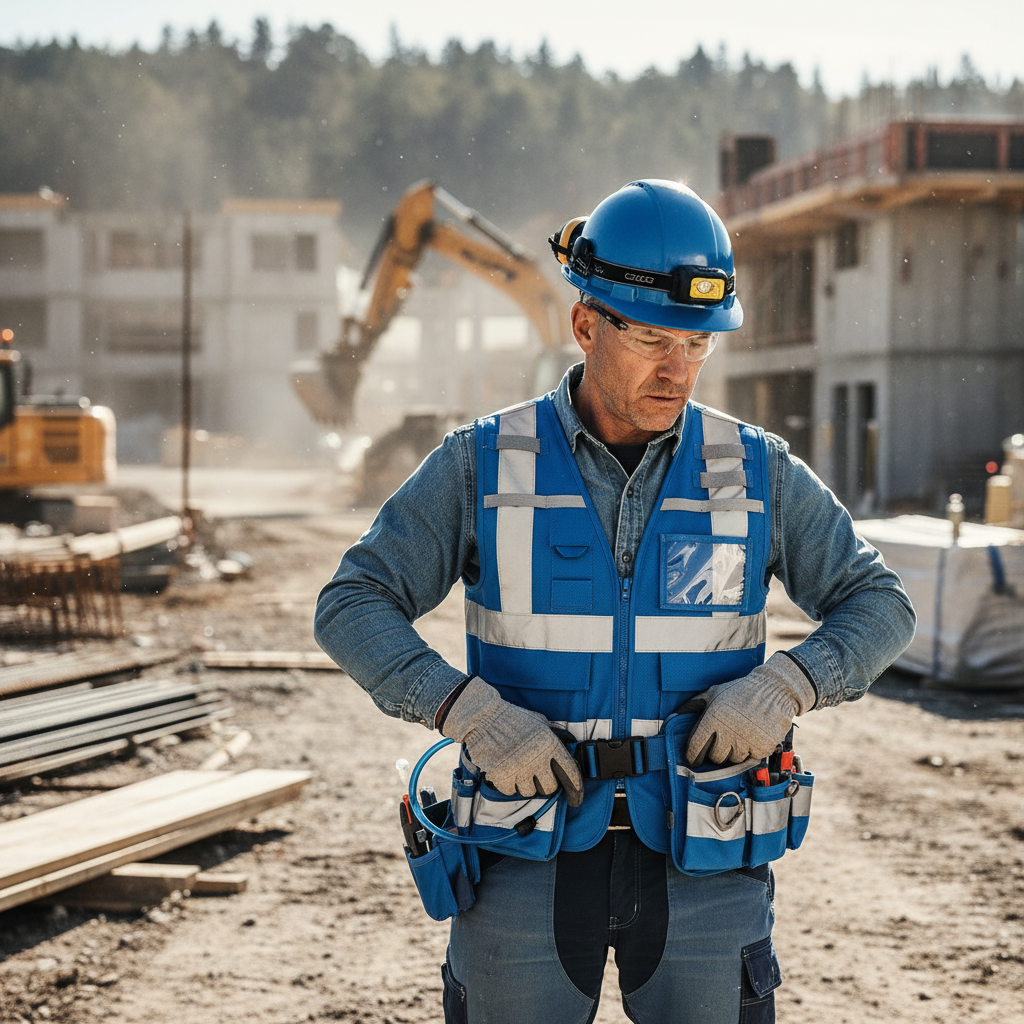
A hi-vis vest is one of the cheapest pieces of PPE on a jobsite, and one of the most commonly worn wrong. Faded vests, torn vests, and vests that are the wrong class for the work show up on sites every day. A vest only does its job if it's the right ANSI class for where you're working and still bright enough to be seen.
This guide covers two things: which class of vest you actually need, and four vests worth buying, from a $12 sleeved Class 3 to a $70 surveyor vest built for supervisors.
Quick Picks
- Best overall (Class 2): Kishigo Premium Black Series S5002 Surveyor Vest
- Best budget (Class 2): JKSafety JK150 9-Pocket Vest
- Best Class 3 for roadwork: Pioneer Hi-Vis Class 3 Sleeved Vest
- Best budget Class 3: Portwest Augusta Sleeved Hi-Vis Vest
Which ANSI Class Do You Need?
Safety vests in the US are rated under ANSI/ISEA 107, which sorts high-visibility garments into performance classes based on how much fluorescent and reflective material they have.
- Class 1: The least material. Meant for off-road work well away from traffic, like warehouses or parking lots. Usually not enough for active construction sites.
- Class 2: The standard choice for most construction work, and the class generally expected for workers near traffic or equipment. Most "construction vests" you'll buy are Class 2.
- Class 3: The most visibility. For workers exposed to higher-speed traffic, poor visibility, or night work, like highway and roadway crews. Class 3 garments need sleeves, so a sleeveless vest generally can't qualify as Class 3 on its own.
ANSI 107 also uses types: Type O (off-road), Type R (roadway and temporary traffic control), and Type P (public safety). For most construction, you want Type R, Class 2 or Class 3.
The bottom line: check your site's safety plan or your GC's PPE requirements. If you work near live traffic, assume Class 2 at minimum, and Class 3 for high-speed roads or night work. Lime and orange are both acceptable colors; many sites specify one.
The Best Construction Safety Vests
Kishigo Premium Black Series S5002 Surveyor Vest — Best Overall
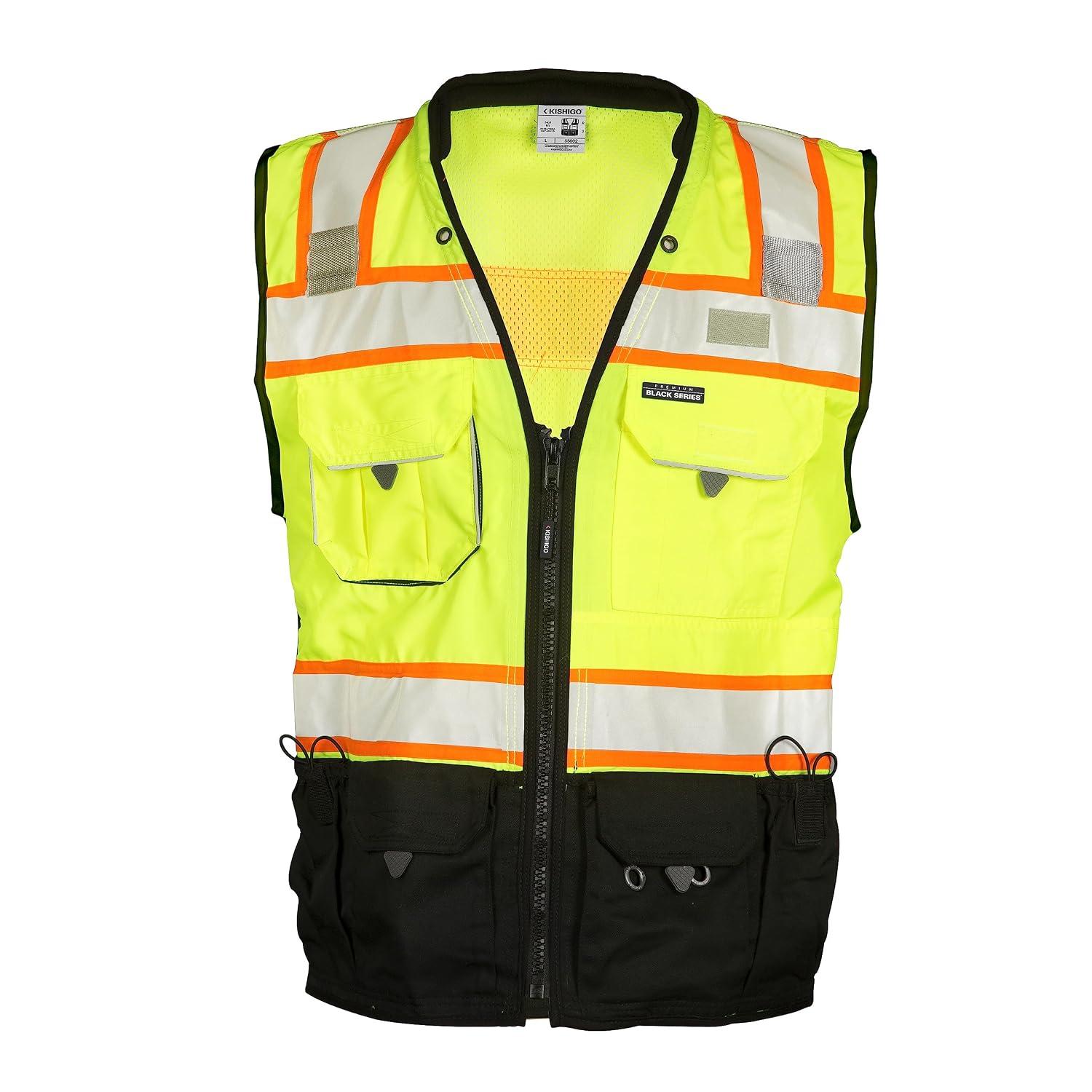
Kishigo Premium Black Series Men's Surveyors Vest S5002, Class 2 Hi-Vis, 10 Pockets
A Class 2 Type R surveyor vest with a solid polyester front, mesh back, padded neck, and pockets built for supervisors who carry documents, a tablet, and marking paint.
$70.69
View on AmazonKishigo states this vest complies with ANSI/ISEA 107-2020 Class 2 Type R, with 2-inch reflective tape. The black lower panel hides jobsite dirt better than an all-lime vest. Despite the "Black Series" name, the upper body is fluorescent lime, which is what keeps it compliant. The pocket layout is the real reason to pay more: a two-tier chest pocket, a large gusseted chest pocket, two lower pockets, stake pockets, and spray-paint can pockets.
Good for: supervisors, foremen, surveyors, and inspectors who live in their vest all day.
Watch out for: at around $70 it's several times the price of a basic vest. If you just need to be compliant and visible, the JKSafety below does that for much less.
JKSafety JK150 9-Pocket Vest — Best Budget Class 2
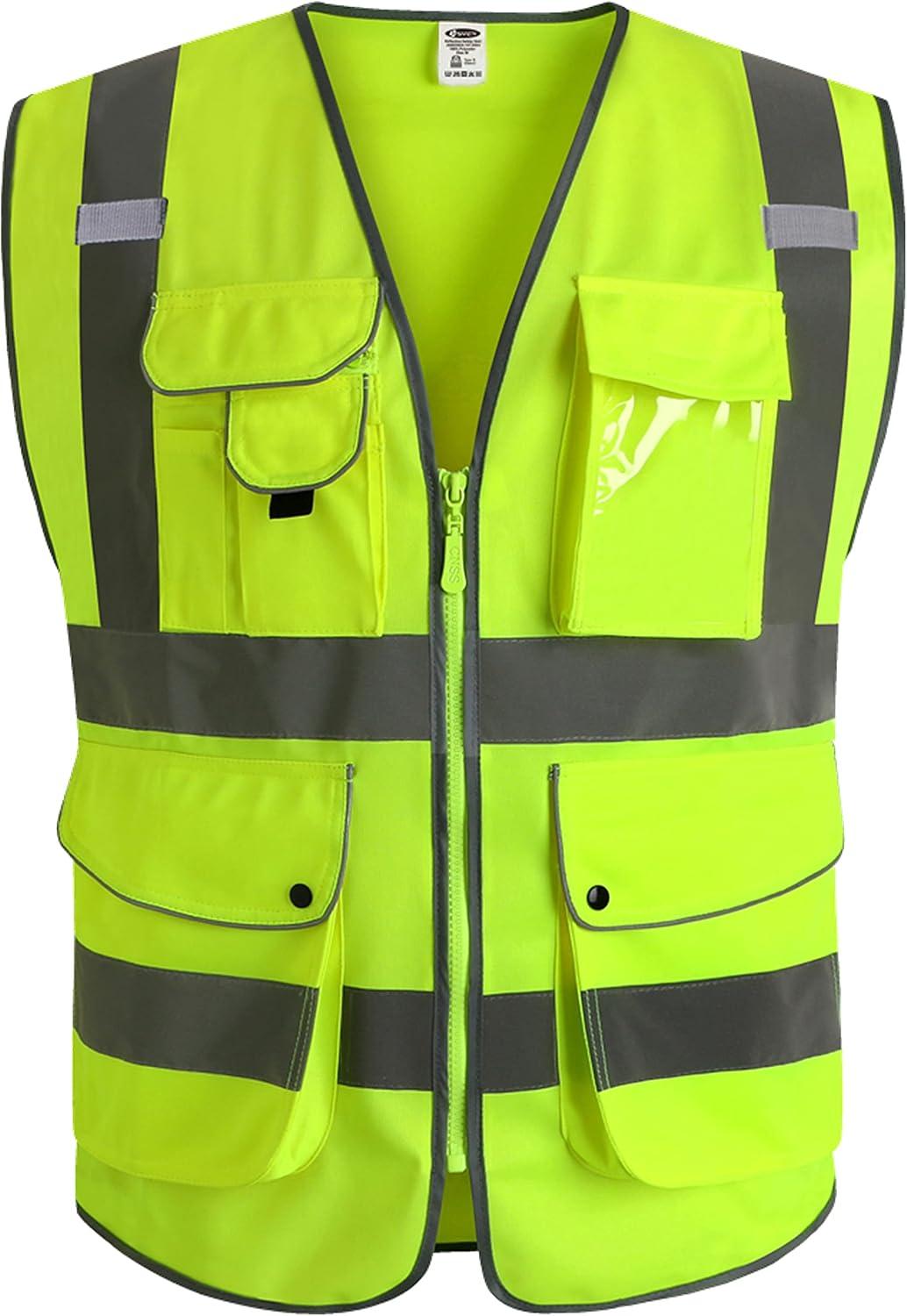
JKSafety Safety Vest JK150, ANSI Class 2, 9 Pockets, Reflective Hi-Vis
A lightweight, machine-washable Class 2 vest with 2-inch reflective strips and nine front pockets, at a price that works for buying in quantity.
$14.99
View on AmazonListed as ANSI Class 2, with 2-inch reflective strips around the waist, chest, shoulders, and back, and nine front pockets. It's lightweight polyester and machine washable, which makes it a practical vest for laborers and for stocking a gang box.
Good for: general labor, new hires, and anyone who needs a compliant vest without paying for supervisor features.
Watch out for: it's a light vest, so expect it to wear faster than the Kishigo under heavy daily use. The listing itself recommends ordering one or two sizes up for a looser fit, so check the size chart, especially if you'll wear it over a jacket.
Pioneer Hi-Vis Class 3 Sleeved Vest — Best for Roadwork
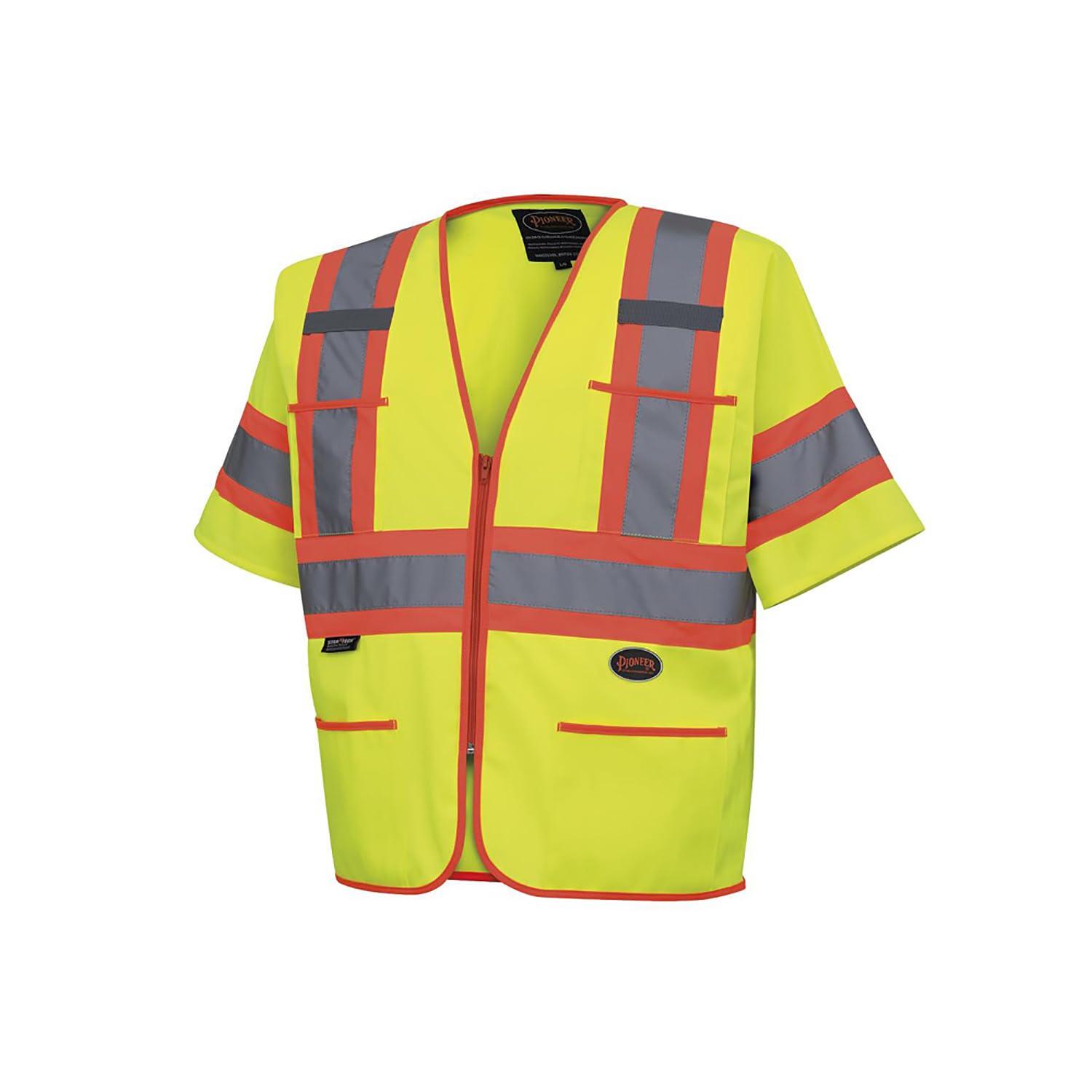
Pioneer Hi Vis Class 3 Safety Vest with Sleeves
A sleeved Class 3 Type P and R vest in breathable tricot polyester, for crews working near high-speed traffic or at night.
$14.49
View on AmazonPioneer lists this as meeting ANSI/ISEA 107 Class 3 Type P and R. The short sleeves are what make Class 3 possible. It has two chest pockets and two waist pockets, and the tricot polyester breathes reasonably well in hot weather.
Good for: highway and roadway crews, traffic control, utility work near live lanes, and night work.
Watch out for: it's a light, basic garment, not a heavy-duty surveyor vest. Wear it as your Class 3 layer, not your tool carrier.
Portwest Augusta Sleeved Hi-Vis Vest — Best Budget Class 3
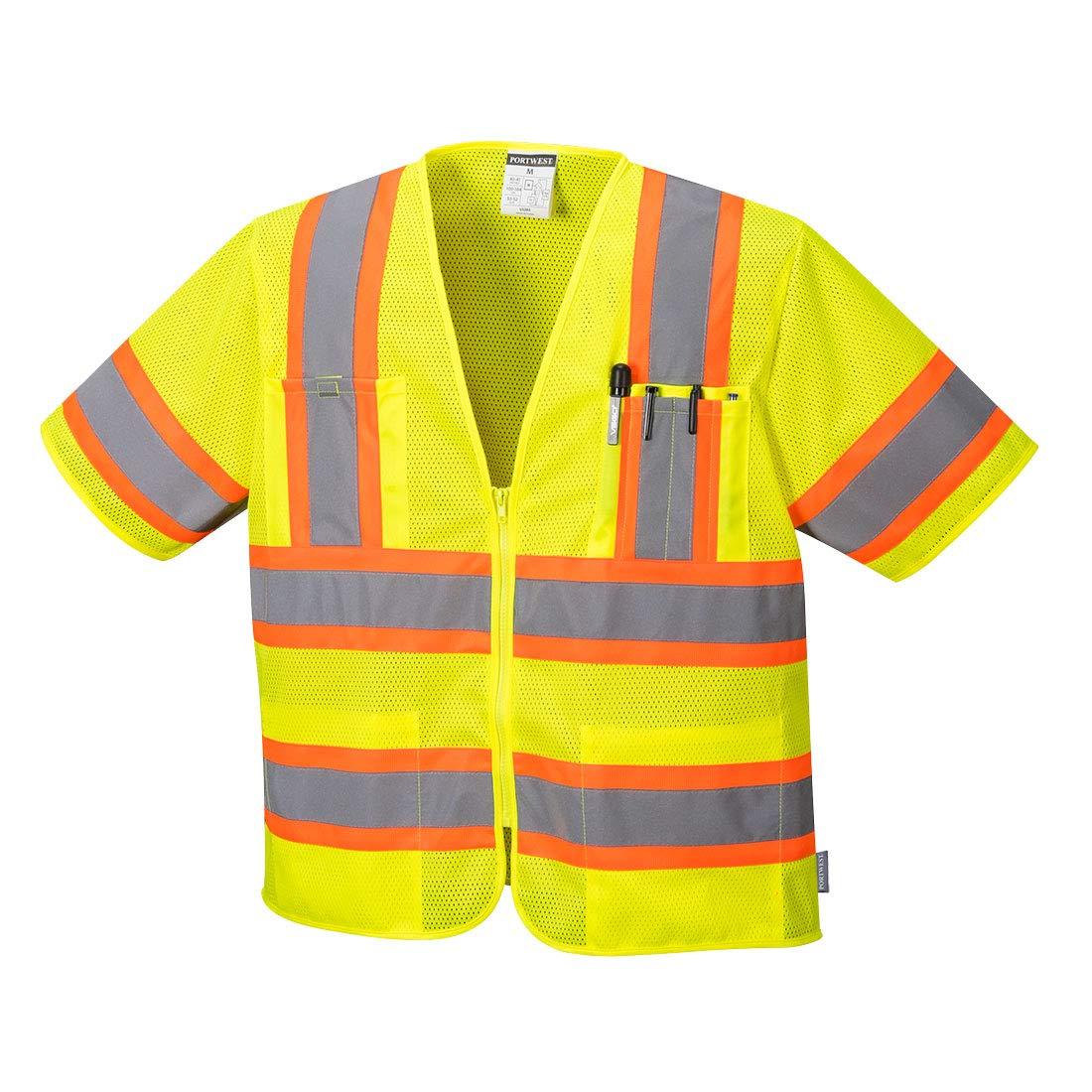
Portwest Augusta Sleeved Hi-Vis Vest, ANSI 3
An inexpensive sleeved mesh vest rated ANSI Class 3, available in lime and orange in a wide size range.
$11.88
View on AmazonA polyester mesh sleeved vest rated ANSI Class 3, with 2-inch silver reflective tape. It comes in yellow (S–7XL) and orange (M–5XL), which is useful when your site specifies a color or you need bigger sizes.
Good for: keeping spare Class 3 vests on hand for crews, visitors, and subs.
Watch out for: mesh is cool but snags more easily than solid fabric, and there's little in the way of pockets.
Buying Tips
- Match the class to the work first, then pick features. A comfortable Class 2 vest does you no good on a job that requires Class 3.
- Size for what you wear underneath. A vest that fits over a T-shirt in July won't close over a winter jacket.
- Mesh vs. solid: mesh is cooler in summer, solid polyester holds up better and carries pocket weight better.
- Breakaway vests are worth considering around rotating equipment, where a snagged vest is a hazard.
- Pockets are for supervisors. Laborers usually don't need ten pockets; supervisors and surveyors do.
When to Replace a Vest
Replace a vest when the fluorescent color has noticeably faded, the reflective tape is cracked, peeling, or dull, seams are torn, or it's too dirty to clean up. A faded vest isn't doing its job, even if it's still in one piece.
To make one last: wash cold, skip the bleach, air dry, and hang it up rather than leaving it balled up in a truck where the sun fades it.