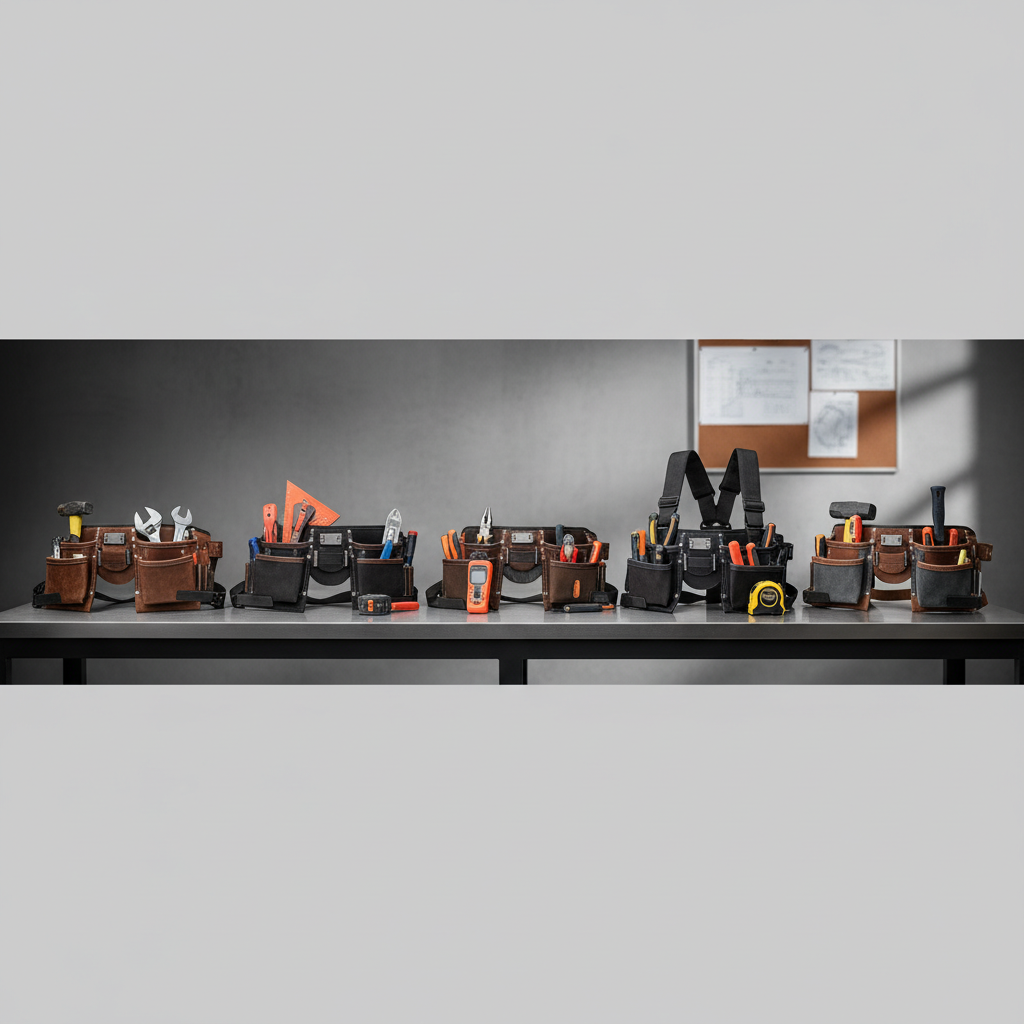
A tool belt carries what you need on your body all day. A tool bag carries everything else — the stuff that rides in the truck bed or van until you need it, then gets hauled to wherever you're working that hour. If you've read our Professional Tool Belts for Carpenters post, this is the other half of the equation: the bag that holds your secondary drill, your speed square collection, extra blades, chalk line, levels, and the random hardware that multiplies every time you open a job box.
Carpenters go through a lot of tool bags, mostly because cheap ones die and good ones get borrowed and never come back. We compared these five on construction, materials, and long-term owner feedback to find the ones that survive getting kicked around a truck bed, rained on, and loaded past what the manufacturer probably intended.
One thing that matters more than pocket count: bottom rigidity. A bag with a soft, floppy base turns into a bowling ball full of loose tools the second you pick it up one-handed. Every bag below either has a rigid molded base or a plywood/HDPE insert — that's the feature that separates "tool bag" from "gym bag you regret."
Husky 15-Inch Contractor's Multi-Purpose Water-Resistant Tool Bag
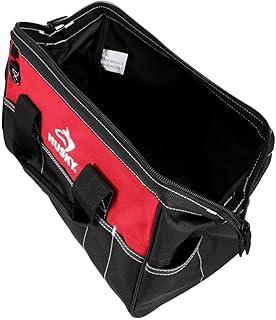
Husky 15-Inch Contractor's Multi-Purpose Water-Resistant Tool Bag
A genuinely useful small tote for under $35 — good for a second bag, a job-box organizer, or a starter kit for an apprentice.
$33.00
View on AmazonThis is the bag people buy as a throwaway and then keep using for a year anyway. At 15 inches it's small — this isn't your main hauler — but the water-resistant base holds up fine getting tossed in a wet truck bed, and the exterior pockets are actually sized for things like a tape measure and a pencil instead of being decorative.
The honest drawback: the shoulder strap hardware is the first thing to fail, and the interior pockets don't hold shape once they're empty, so a half-loaded bag just collapses in on itself. It's also genuinely too small to be a primary bag for a working carpenter — think of it as a satellite bag for fasteners and small hand tools, not your main kit.
Best for apprentices building their first kit, or anyone who wants a cheap dedicated bag for a specific task (finish hardware, a small router and bits, whatever) without committing real money to it.
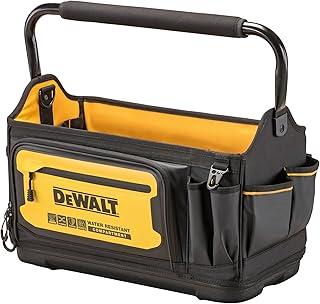
DeWalt DWST560106 Tool Tote 20-Inch x 10-Inch
DeWalt DWST560106 Tool Tote 20-Inch x 10-Inch
The bag most carpenters actually reach for — big enough for a real tool load, rigid enough to not tip over, priced low enough to not think twice about buying two.
$65.92
View on AmazonThis is the one that ends up in the back of the truck on basically every job. The 20-inch length is the sweet spot — long enough to lay a circular saw down flat next to a drill and a level without everything stacked on top of each other, and the rigid molded base means it stands up on its own when you set it down on uneven ground, which sounds minor until you've watched a soft-bottom bag tip over and dump a mixed-thread screw assortment into gravel.
Long-term owner reviews describe the wear you'd expect — scuffed outer fabric and corner abrasion from getting dragged across a tailgate — but the structure and stitching hold up well. The molded plastic feet on the bottom take the brunt of the abuse and protect the fabric.
Main drawback: the interior is mostly one open bay with a divider and a few small pockets, so it's not great for keeping small parts sorted — you'll want a parts organizer or a second small bag for hardware. It also has no rain cover, so a downpour means wet tools if it's sitting open in the bed.
Best for a working carpenter who wants one dependable, no-drama tote for the bulk of their gear without overthinking it.
Custom Leathercraft (CLC) 1539 Multi-Compartment 50 Pocket Tool Bag
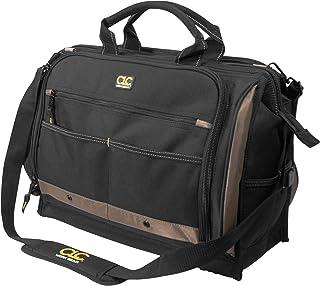
Custom Leathercraft (CLC) 1539 Multi-Compartment 50 Pocket Tool Bag
The most organized bag on this list — 50 pockets means everything has a dedicated spot, which matters when you're carrying a mixed load of hand tools and power tools.
$99.95
View on AmazonCLC built this thing for people who hate digging. The center bay is sized to swallow a drill or an impact driver upright, and the surrounding pockets — all 50 of them, in various sizes — mean your pliers, snips, chisels, and marking tools each get their own slot instead of getting lost in a pile at the bottom. If you're the type who wants to grab a specific tool without looking, this is the bag.
The rigid bottom is genuinely rigid — it doesn't sag even loaded heavy, and the center divider keeps a drill from tipping over into your hand tools when you're moving it. After a season of daily use, the main complaint isn't the bag itself but the zipper pulls on a couple of the smaller pockets, which have started to feel less confident than they did new.
Main drawback: with everything full, it gets heavy fast and the shoulder strap padding isn't quite enough for a long carry with a full load — you'll want to use the top handle for short hauls. It's also bulkier than the DeWalt tote for the same reason it's more organized; if you just need to grab a few tools and go, digging through 50 pockets to figure out where you put something back can slow you down until you memorize the layout.
Best for carpenters running a mixed load of power tools and hand tools who want everything to have a home, especially finish carpenters juggling more specialty tools than a framer would carry.
Klein Tools 55469 Tradesman Pro Wide-Open Tool Bag
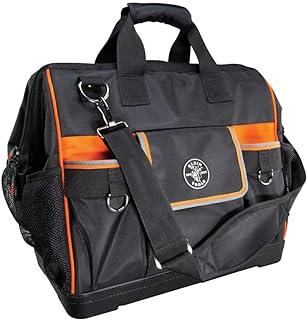
Klein Tools 55469 Tradesman Pro Wide-Open Tool Bag
Opens flat like a toolbox instead of a bag, so you can see and reach everything at once — built with Klein's typical overbuilt hardware and stitching.
$114.99
View on AmazonThe wide-open top on this bag is the whole selling point, and it delivers — instead of reaching down into a narrow opening and feeling around, the mouth of the bag opens almost as wide as the base, so you can see every tool at a glance the way you would with a hard toolbox. Klein's molded base is one of the stiffer ones on the market; loaded with a full set of pliers, strippers, and a couple of drivers, it doesn't flex or sag at all.
Where this bag earns its price is the hardware — the zipper pulls are metal, the D-rings feel like they're rated for actual weight, and the reinforced stitching at the strap attachment points hasn't shown any stress after a full season of getting thrown in and out of a truck. It's the closest thing on this list to "built like Klein builds their pliers."
Main drawback: because it opens flat and wide, it's not as secure for transport as a top-loading bag — tools can shift or fall out if you tip it or carry it at an angle instead of upright, and there's no zip closure over the main compartment, just a wide mouth. It's also on the pricier side for its size class relative to the DeWalt or CLC options above.
Best for electricians and carpenters doing finish or trim work who need to see their whole tool layout at a glance rather than dig through pockets — and for anyone who's tired of bag hardware failing first.
Veto Pro Pac OT-XL Tool Bag
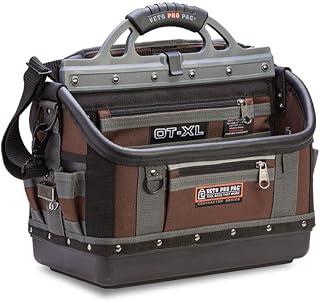
Veto Pro Pac OT-XL Tool Bag
Genuinely overbuilt — a waterproof, rigid-base bag with 40+ tiered pockets that's meant to be the last tool bag you ever buy, priced accordingly.
$294.95
View on AmazonThere's a reason Veto Pro Pac bags show up on job sites carried by the guy who's been doing this for twenty-five years and doesn't buy anything twice. The OT-XL has a genuinely rigid, waterproof base that shrugs off standing water and gets set down on rebar or gravel without a second thought, and the 40 tiered vertical pockets mean tools of very different sizes — from a pencil to a full-size hammer — each sit at the right height instead of sliding around loose.
The stitching is industrial-grade and it shows: this bag is built the way a work boot is built, with reinforced seams at every stress point and a shoulder strap that doesn't dig in even loaded heavy. Veto backs it with a 5-year limited warranty, which tells you something about how confident they are it won't fall apart on you.
Main drawback is the obvious one: nearly $300 is a real number for a tool bag, and it takes years of daily use to make that math work out versus buying a mid-tier bag twice. It's also heavier empty than most of the other bags on this list, which matters if you're already hauling a loaded belt and a second bag across a site all day.
Best for carpenters who've already gone through two or three cheaper bags and are done replacing gear, or anyone running a business where a failed bag costs more in downtime than the bag itself costs to buy right the first time.
Recommendations by use case
- Tight budget, need something today: Husky 15-Inch Contractor's Bag — cheap, functional, fine for a secondary or starter bag.
- One do-it-all bag for daily jobsite use: DeWalt DWST560106 Tool Tote — the balance of size, price, and durability most carpenters actually need.
- Carrying a mix of power tools and organized hand tools: CLC 1539 — 50 pockets means nothing gets lost at the bottom.
- Finish work where you need to see your whole layout fast: Klein Tools 55469 Wide-Open Bag — opens flat, overbuilt hardware.
- You're done buying cheap bags and want the last one: Veto Pro Pac OT-XL — rigid, waterproof, backed by a 5-year warranty.
Bottom Line
For most working carpenters, the DeWalt DWST560106 is the one to buy first — it's cheap enough not to sweat, big enough for a real tool load, and the rigid base solves the single biggest complaint people have with tool bags (them tipping over and dumping everything). If your work is more organization-heavy — a mix of power tools, drivers, and small hand tools you need to find fast — step up to the CLC 1539 and its 50 pockets.
If you're buying on a tight budget or need a second bag for overflow gear, the Husky 15-Inch does the job without pretending to be more than it is. And if you've already worn out a couple of bags and you're ready to stop replacing gear, the Veto Pro Pac OT-XL is the one that's genuinely built to outlast the rest of this list combined — the price just reflects that. Whichever tier you land in, prioritize a rigid base over pocket count; a bag that stands up on its own saves you more headaches over a year than any amount of organizational pockets.